








PCD Saw Blades for Laminated Panels & Composites – 250–350mm
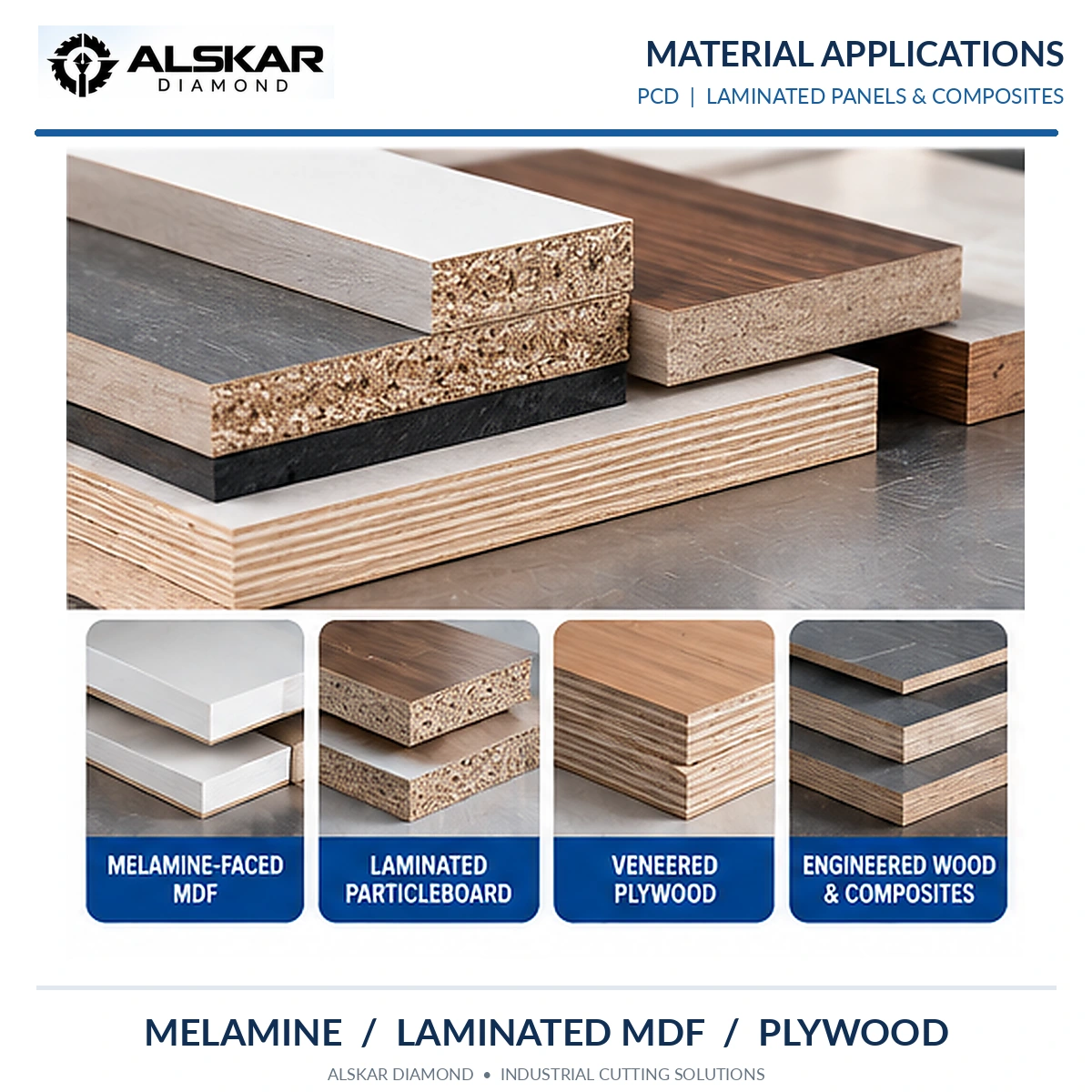
ALSKAR PCD Saw Blades for Laminated Panels & Composites are developed for industrial sizing and precision cutting of melamine-faced panels, laminated MDF, particleboard, veneered plywood, and compatible engineered wood materials.
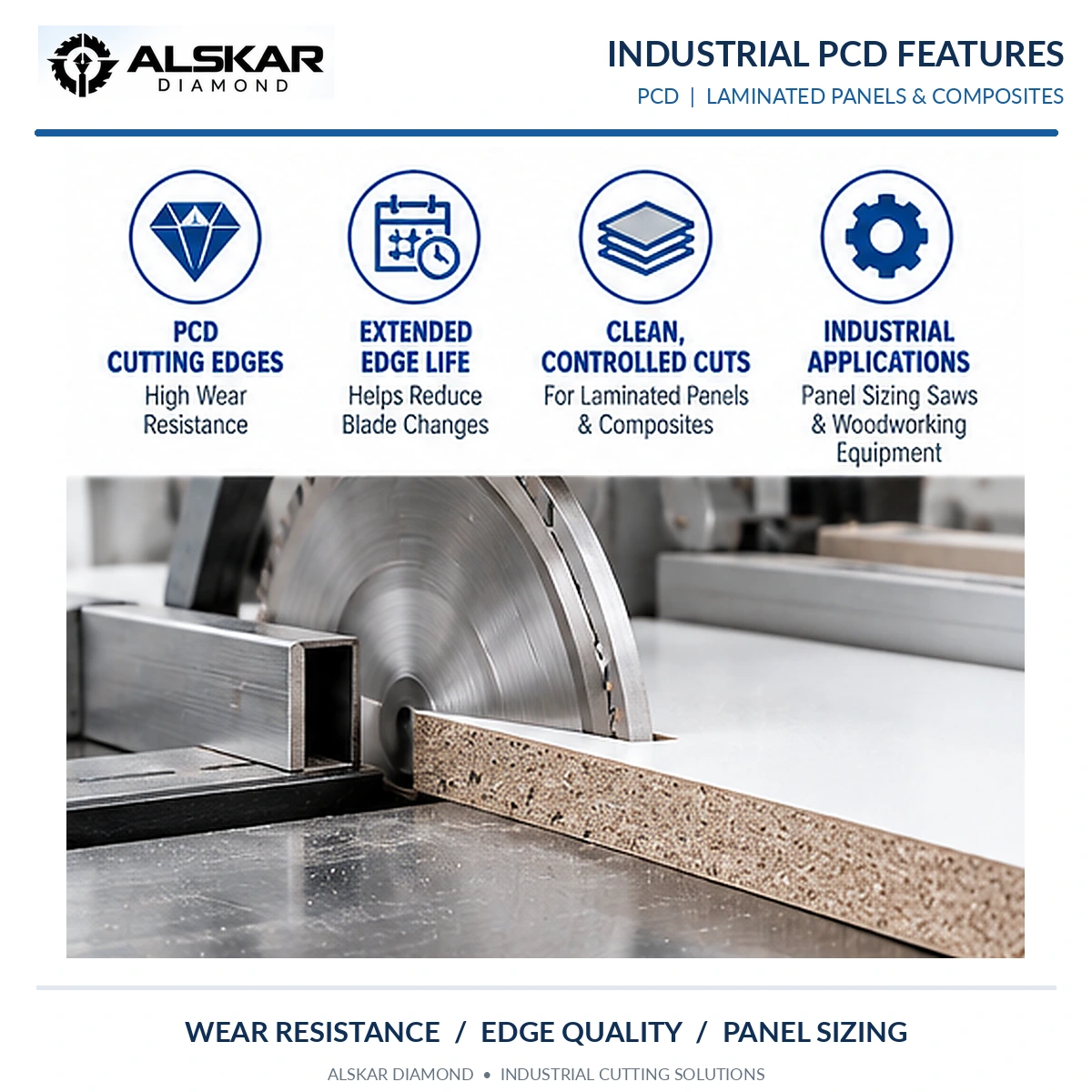
Featuring polycrystalline diamond (PCD) cutting tips, this Supreme Series is designed for extended cutting-edge life and consistent processing performance in demanding panel manufacturing applications.
Key Features
- Industrial PCD-tipped circular saw blades for professional panel processing
- Polycrystalline diamond cutting tips for excellent wear resistance
- Designed for extended edge life in compatible abrasive wood-based materials
- Helps reduce blade replacement and sharpening frequency under suitable operating conditions
- Suitable for selected melamine-faced MDF, laminated particleboard, veneered plywood, and engineered panels
- Selected composite panel applications, subject to material approval
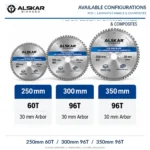
- Three proposed configurations: 250mm × 60T, 300mm × 96T, and 350mm × 96T
- Standard proposed 30mm arbor for all three configurations
- Intended for compatible industrial panel-sizing saws and professional woodworking equipment
- Supports clean, controlled cutting when correctly paired with the machine, panel material, and scoring system
Proposed Configurations
- 250mm × 60T × 30mm Arbor
- 300mm × 96T × 30mm Arbor
- 350mm × 96T × 30mm Arbor
Important: PCD blade selection depends on the panel material, tooth geometry, cutting width, mounting arrangement, scoring requirements, and machine operating conditions. Final product specifications and availability are subject to factory confirmation. Not intended for steel or other unapproved materials.
1. PCD Saw Blades for Laminated Panels & Composites
Industrial Polycrystalline Diamond Cutting Solutions for Laminated Panels, Engineered Wood & Selected Composites
ALSKAR PCD Saw Blades for Laminated Panels & Composites are developed for professional woodworking and industrial panel-processing applications where cutting-edge durability, processing consistency, and production efficiency are important.
Featuring polycrystalline diamond (PCD) cutting tips mounted on a precision steel blade body, this Supreme Series is designed for compatible laminated MDF, melamine-faced particleboard, veneered plywood, and selected engineered wood materials.
Compared with conventional carbide-tipped saw blades used under comparable conditions, properly selected PCD blades can offer extended cutting-edge life when processing abrasive wood-based panels.
This makes PCD cutting technology particularly relevant to high-volume furniture manufacturing, cabinet production, industrial panel sizing, and specialized composite panel processing.
The proposed ALSKAR range includes 250mm 60T, 300mm 96T, and 350mm 96T configurations with 30mm arbors.
2. Key Features & Benefits
1. Polycrystalline Diamond Cutting Technology
PCD is a synthetic polycrystalline diamond cutting material developed for high wear resistance in suitable machining applications.
Unlike traditional tungsten carbide tipped (TCT) blades, PCD-tipped saw blades use diamond-based cutting edges.
This provides an important advantage in applications involving abrasive board surfaces, resin-containing engineered panels, and demanding production conditions.
Actual cutting performance depends on PCD grade, tooth geometry, cutting parameters, workpiece composition, and equipment setup.
2. Extended Cutting-Edge Life
The high wear resistance of PCD helps maintain usable cutting edges for extended periods when working with compatible materials.
Longer cutting-edge life can reduce the frequency of blade changes and specialist sharpening operations in suitable industrial production environments.
Actual service life and economic benefits vary according to panel abrasiveness, blade specification, maintenance, and cutting conditions.
3. Industrial Laminated Panel Cutting
The series is intended for compatible melamine-faced boards, laminated MDF, decorative particleboard, and veneered plywood.
Appropriately selected blade geometry supports precision cutting and consistent edge quality on suitable coated wood-based panels.
For demanding double-sided decorative panels, correct workpiece support and an appropriate scoring system may be required to help reduce chipping.
4. Designed for High-Volume Production
Industrial panel processing often involves repeated cutting of abrasive engineered boards.
PCD cutting tools can be advantageous where production volume, tool-change frequency, and edge-life consistency are important factors.
This series is positioned for cabinet factories, furniture production lines, professional panel-sizing operations, and industrial woodworking workshops.
5. Three Selected Industrial Configurations
The proposed product range includes:
- 250mm × 60T × 30mm Arbor
- 300mm × 96T × 30mm Arbor
- 350mm × 96T × 30mm Arbor
Each configuration must be matched to the panel material, intended cutting method, machine dimensions, and required cutting quality.
6. Precision Cutting of Engineered Wood Materials
Suitable applications include selected MDF, HDF, laminated particleboard, and veneered panels.
The exact blade construction must be selected according to surface coating, board density, abrasive fillers, and cutting conditions.
7. Selected Composite Panel Applications
Certain PCD blade configurations may be suitable for approved wood-plastic composites, resin-based panels, or other engineered composite materials.
However, different composite materials can require significantly different tooth geometry, cutting speeds, dust extraction, and blade construction.
Compatibility with fiber-reinforced, mineral-filled, or specialty composite panels must be confirmed separately.
3. Recommended Materials
Primary Material Applications
- Melamine-Faced MDF
- Laminated Particleboard
- Melamine-Faced Chipboard
- Veneered Plywood
- Selected MDF and HDF Panels
- Compatible Engineered Wood Boards
- Selected Decorative Furniture Panels
- Suitable Resin-Bonded Wood Panels
Additional Applications — Subject to Model Approval
- Selected Wood-Plastic Composites (WPC)
- Compatible Resin-Based Composite Panels
- Selected High-Pressure Laminate (HPL) Materials
- Other Approved Abrasive Engineered Panels
Do Not Assume Compatibility With
- Mild Steel
- Stainless Steel
- Cast Iron
- Concrete or Masonry
- Carbon Fiber-Reinforced Composites (CFRP)
- Glass Fiber-Reinforced Composites (GFRP)
- Fiber Cement
- Mineral-Filled Construction Panels
- Aluminum Composite Panels
These specialized materials require separate product testing and approved blade specifications.
4. Recommended Applications
Industrial Panel Sizing
Precision sizing of suitable laminated and engineered wood panels on approved industrial woodworking equipment.
Cabinet Manufacturing
Cutting decorative boards used in kitchen cabinets, wardrobes, shelving, and furniture components.
Furniture Production
Repeated processing of suitable MDF, particleboard, veneered plywood, and coated wood-based panels.
Laminated Panel Processing
Cutting appropriate decorative boards where edge consistency and tool life are important.
Selected Composite Panel Manufacturing
Cutting approved composite materials when the blade’s PCD grade and tooth geometry have been validated for the application.
5. Compatible Machines
Depending on the final product specification:
- Industrial Panel Sizing Saws
- Compatible Sliding Table Saws
- Professional Panel Cutting Machines
- Selected Vertical Panel Saws
- Other Approved Woodworking Machines Designed for the Required Blade
Machine compatibility must be verified individually.
The selected blade diameter, arbor, pin-hole pattern, kerf, plate thickness, operating speed, and machine guards must satisfy the machine manufacturer’s requirements.
A 30mm arbor does not automatically establish compatibility with every industrial panel saw.
6. Technical Specifications
| Specification | Details |
|---|---|
| Brand | ALSKAR DIAMOND |
| Product Series | PCD Saw Blades for Laminated Panels & Composites |
| Proposed Quality Grade | Supreme / Industrial |
| Blade Type | PCD-Tipped Circular Saw Blade |
| Cutting Material | Polycrystalline Diamond (PCD) |
| Blade Body | Steel |
| Diameter | 250mm / 300mm / 350mm |
| Tooth Count | 60T / 96T |
| Arbor | 30mm |
| 250mm Reference Kerf | 3.2mm |
| 250mm Reference Plate Thickness | 2.2mm |
| 300mm Reference Kerf | 3.2mm |
| 300mm Reference Plate Thickness | 2.2mm |
| 350mm Reference Kerf | 3.5mm |
| 350mm Reference Plate Thickness | 2.4mm |
| Tooth Grind | Subject to Factory Confirmation |
| PCD Tip Grade | Subject to Factory Confirmation |
| PCD Tip Dimensions | Subject to Factory Confirmation |
| Additional Pin Holes | Subject to Machine Requirements |
| Maximum RPM | Refer to Actual Supplied Blade |
| Cutting Method | Dry, Subject to Blade & Machine Approval |
| Main Applications | Laminated & Engineered Wood Panels |
| Selected Composites | Subject to Material-Specific Approval |
Note: The listed cutting widths and plate thicknesses are selected market-reference targets, not yet verified ALSKAR manufacturing specifications.
7. PCD Saw Blades vs. TCT Saw Blades
PCD — Polycrystalline Diamond
PCD blades use synthetic polycrystalline diamond cutting edges.
They are particularly relevant for applications involving abrasive wood-based boards, selected composite materials, and industrial operations where extended edge life may reduce tool-change frequency.
TCT — Tungsten Carbide Tipped
TCT blades use tungsten carbide cutting teeth and provide versatile solutions for compatible woodworking and panel-cutting tasks.
They are often a practical choice for general workshop cutting, smaller production volumes, and applications where conventional carbide blade geometry is suitable.
The most economical solution depends on purchase cost, cutting volume, material abrasiveness, blade maintenance, and tool service life.
8. PCD Panel Saw Blades vs. PCD Fiber Cement Blades
These are different application categories and must not be confused.
PCD panel-sizing blades use tooth counts and geometries appropriate for compatible laminated and wood-based panels.
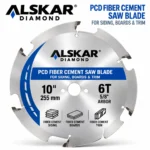
Specialized PCD fiber cement blades may use much lower tooth counts and different cutting-edge designs for abrasive cement-based materials.
A PCD panel saw blade must not be assumed suitable for fiber cement solely because both blade types contain diamond cutting material.
9. Do PCD Panel Saw Blades Require a Scoring Blade?
PCD cutting edges do not automatically eliminate surface chipping.
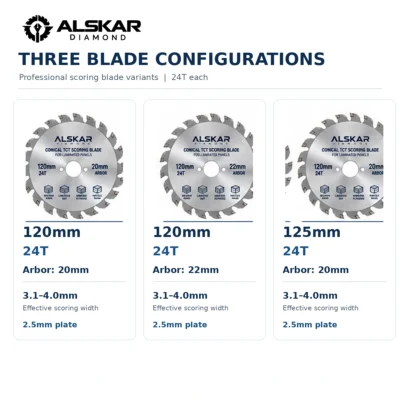
When double-sided melamine or decorative panels require clean top and bottom edges, a correctly matched scoring blade may still be necessary.
The scoring width, main blade kerf, scoring depth, workpiece support, and machine alignment must be adjusted according to the panel and equipment requirements.
10. PCD Blade Resharpening & Maintenance
Some PCD saw blades can be professionally resharpened, depending on the PCD tip construction, remaining cutting material, and manufacturer’s design.
PCD blades require appropriate specialist sharpening or erosion processes.
Do not use ordinary carbide sharpening procedures without confirmation from a qualified PCD tool service provider.
Inspect cutting tips, blade body, mounting holes, and expansion slots regularly.
Do not operate a blade with cracked PCD tips, missing teeth, distortion, or damaged mounting features.
11. How to Choose the Correct PCD Saw Blade
Step 1 — Identify the Panel Material
Confirm whether the workpiece is melamine-faced MDF, laminated particleboard, veneered plywood, or another engineered material.
Step 2 — Confirm the Blade Application
Determine whether the blade will be used for panel sizing, crosscutting, or other approved processing operations.
Step 3 — Select the Correct Diameter
Choose 250mm, 300mm, or 350mm according to the machine manufacturer’s approved blade dimensions.
Step 4 — Verify the Arbor & Pin Holes
Confirm the 30mm arbor and any additional locating-hole pattern required by the machine.
Step 5 — Check Kerf & Plate Thickness
Verify the actual blade cutting width and steel plate thickness against machine requirements.
Step 6 — Review Scoring Requirements
Where a scoring blade is used, confirm that the scoring system can be correctly matched to the main PCD blade’s kerf.
Step 7 — Verify the Cutting Conditions
Confirm the machine’s approved operating speed, feed conditions, blade direction, workpiece support, and dust extraction.
Step 8 — Confirm Specialist Material Compatibility
For composite materials beyond ordinary engineered wood boards, obtain approval for the exact material before cutting.
12. Operating & Safety Recommendations
- Use only equipment approved for the selected blade and material.
- Confirm blade diameter, arbor, and any locating-pin requirements.
- Never exceed the maximum RPM marked on the actual blade.
- Verify compatibility with the machine’s spindle and mounting flanges.
- Confirm correct blade rotation and cutting direction.
- Match the main blade kerf and scoring system where applicable.
- Use appropriate guarding and workpiece support.
- Maintain effective dust extraction, particularly when cutting resin-containing panels.
- Wear appropriate eye, hearing, and respiratory protection.
- Inspect the PCD cutting tips before use.
- Do not operate damaged or distorted blades.
- Do not use ordinary carbide sharpening methods on PCD cutting edges.
- Do not cut steel or other materials outside the blade’s approved application.
- Follow all blade and machine manufacturer instructions.
13. Why Choose ALSKAR DIAMOND?
ALSKAR DIAMOND supplies professional cutting tools for woodworking, construction, stone processing, metal fabrication, and industrial applications.
Our PCD Saw Blade Series is being developed for industrial customers seeking durable cutting solutions for laminated panels, engineered wood, and approved composite materials.
With selected 250mm, 300mm, and 350mm configurations, the series provides practical options for professional panel manufacturing and processing equipment.
For technical recommendations, wholesale quotations, or distributor inquiries, contact ALSKAR DIAMOND with your material specification, machine model, blade diameter, arbor, cutting requirements, and estimated purchase quantity.
14. Frequently Asked Questions
What is a PCD saw blade?
A PCD saw blade uses polycrystalline diamond
cutting tips rather than conventional
tungsten carbide teeth.
PCD is especially useful for certain
abrasive wood-based panels and industrial
cutting applications where extended
cutting-edge life is important.
What is the difference between PCD and TCT
saw blades?
PCD blades feature polycrystalline diamond
cutting edges, while TCT blades use
tungsten carbide tips.
PCD can provide extended edge life
in suitable abrasive materials.
Actual performance and value depend
on the blade specification, material,
production volume, and cutting conditions.
What sizes and tooth counts are planned?
The proposed ALSKAR range includes
250mm 60T, 300mm 96T, and 350mm 96T.
All three configurations are planned
with a 30mm arbor.
Final commercial specifications and
availability are subject to confirmation.
Can PCD saw blades cut melamine-faced MDF?
Suitable PCD blade configurations are
intended for compatible melamine-faced MDF,
laminated particleboard, veneered plywood,
and other approved engineered wood panels.
Correct tooth geometry and machine setup
are essential for good cutting results.
Can these blades cut composite materials?
Selected composite panel materials may
be suitable when the blade has been
specifically approved for their composition.
Do not assume compatibility with CFRP,
GFRP, fiber cement, mineral composites,
or aluminum composite panels without
separate product validation.
Do PCD panel saw blades eliminate
the need for a scoring blade?
Not necessarily.
Double-sided laminated panels may still
require an appropriately matched scoring
blade to reduce underside chipping.
Results depend on the main blade, scoring
width, panel coating, alignment,
and cutting conditions.
What is the cutting width of these blades?
The proposed reference cutting widths
are 3.2mm for the 250mm and 300mm models,
and 3.5mm for the 350mm model.
These are market-reference target
specifications and require confirmation
for ALSKAR production models.
Can a PCD saw blade be resharpened?
Certain PCD saw blades can be professionally
resharpened, depending on the cutting-tip
design and remaining usable PCD material.
Contact a qualified PCD tool service
provider and follow the manufacturer’s
recommendations.
Are these blades suitable for regular
handheld circular saws?
This series is primarily intended for
compatible industrial panel-sizing
and professional woodworking equipment.
Handheld saw compatibility must not
be assumed based on diameter alone.
Does a 30mm arbor fit every panel saw?
No. Machine compatibility also depends on
the blade diameter, mounting flanges,
locating holes, cutting width, operating
speed, and other equipment requirements.
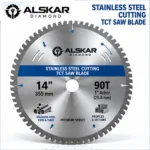
Can PCD panel saw blades cut stainless steel?
No. These PCD panel saw blades are not
intended for steel or stainless steel.
Use cutting tools specifically approved
for ferrous metal applications.
Why choose PCD for industrial panel production?
PCD cutting edges offer high wear resistance
and can provide extended usable edge life
in suitable abrasive panel applications.
For high-volume production, this may help
reduce tool-change frequency and improve
production continuity.
Can I request a wholesale quotation?
Yes. Contact ALSKAR DIAMOND with your
machine model, panel material, blade
diameter, arbor, desired kerf,
required quantity, and destination market.
Final product specifications, availability,
and pricing will be confirmed during quotation.
| Blade Configuration | 250mm – 60T – 30mm Arbor, 300mm – 96T – 30mm Arbor, 350mm – 96T – 30mm Arbor |
|---|---|
| Quality Grade | Supreme |
| Cutting Material | PCD |
| Blade Type | PCD Panel Sizing Saw Blade |
| Recommended Materials | Laminated MDF / Particleboard / Engineered Wood |
| Cutting Method | Dry, subject to approval |
| Machine Application | Industrial Panel Saws |







Reviews
There are no reviews yet.