




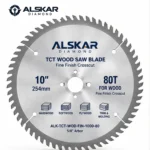
Thin Kerf TCT Wood Saw Blades – 40T & 50T
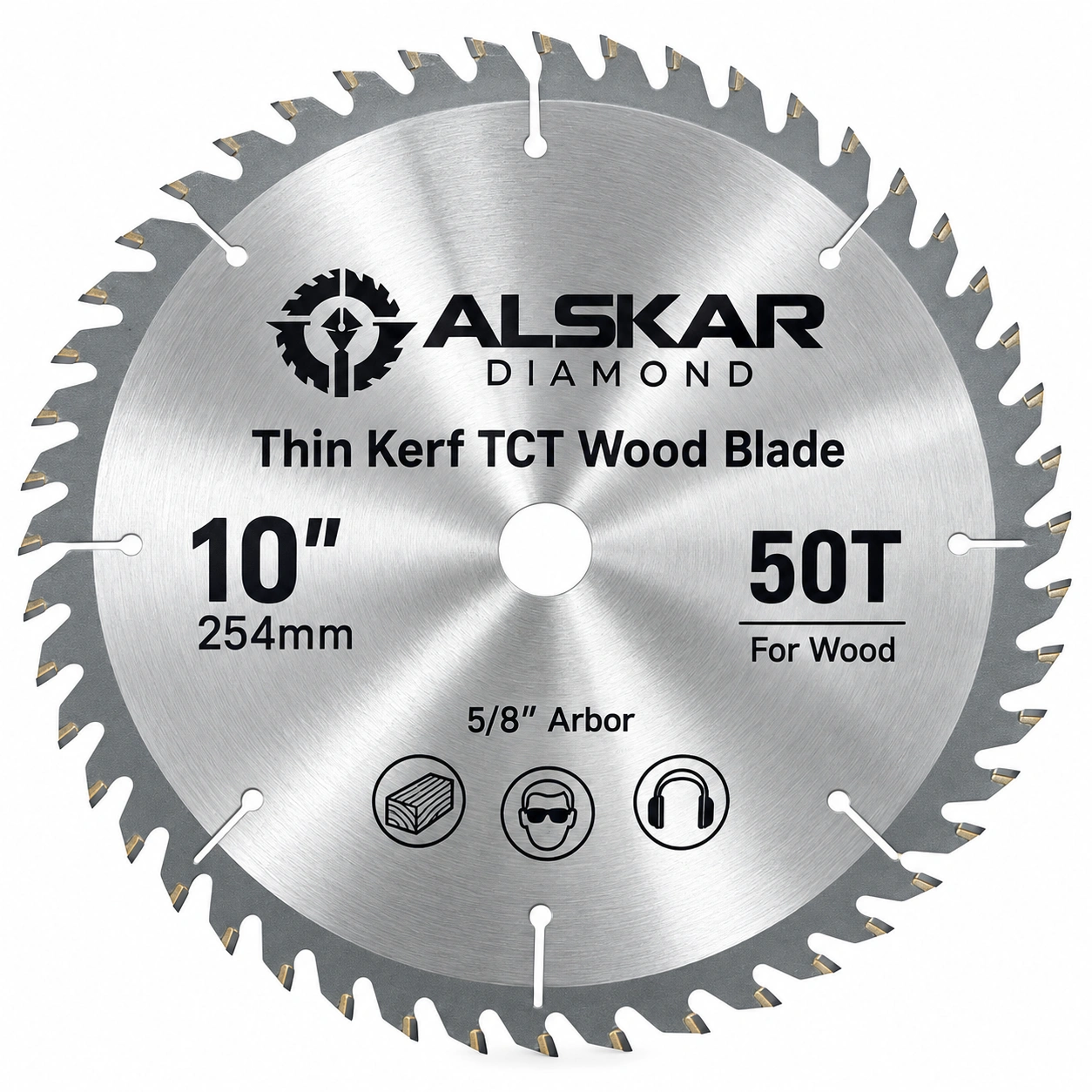
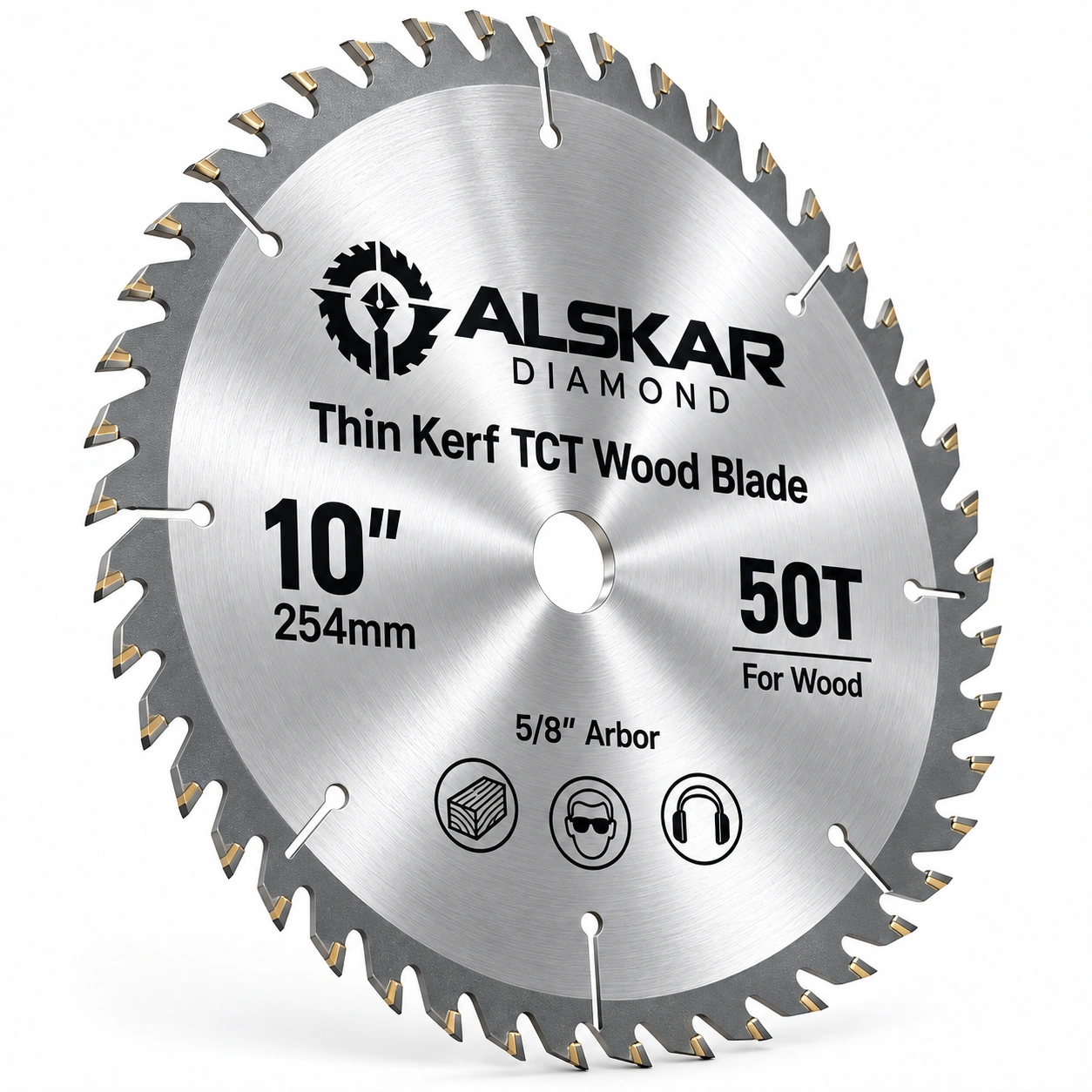
ALSKAR Thin Kerf TCT Wood Saw Blades are developed for efficient cutting in softwood, hardwood, plywood, and compatible wood-based materials. Featuring a narrow kerf design and tungsten carbide tipped teeth, this Premium series is designed to reduce material removal while delivering a practical balance of cutting efficiency and surface finish.
Key Features
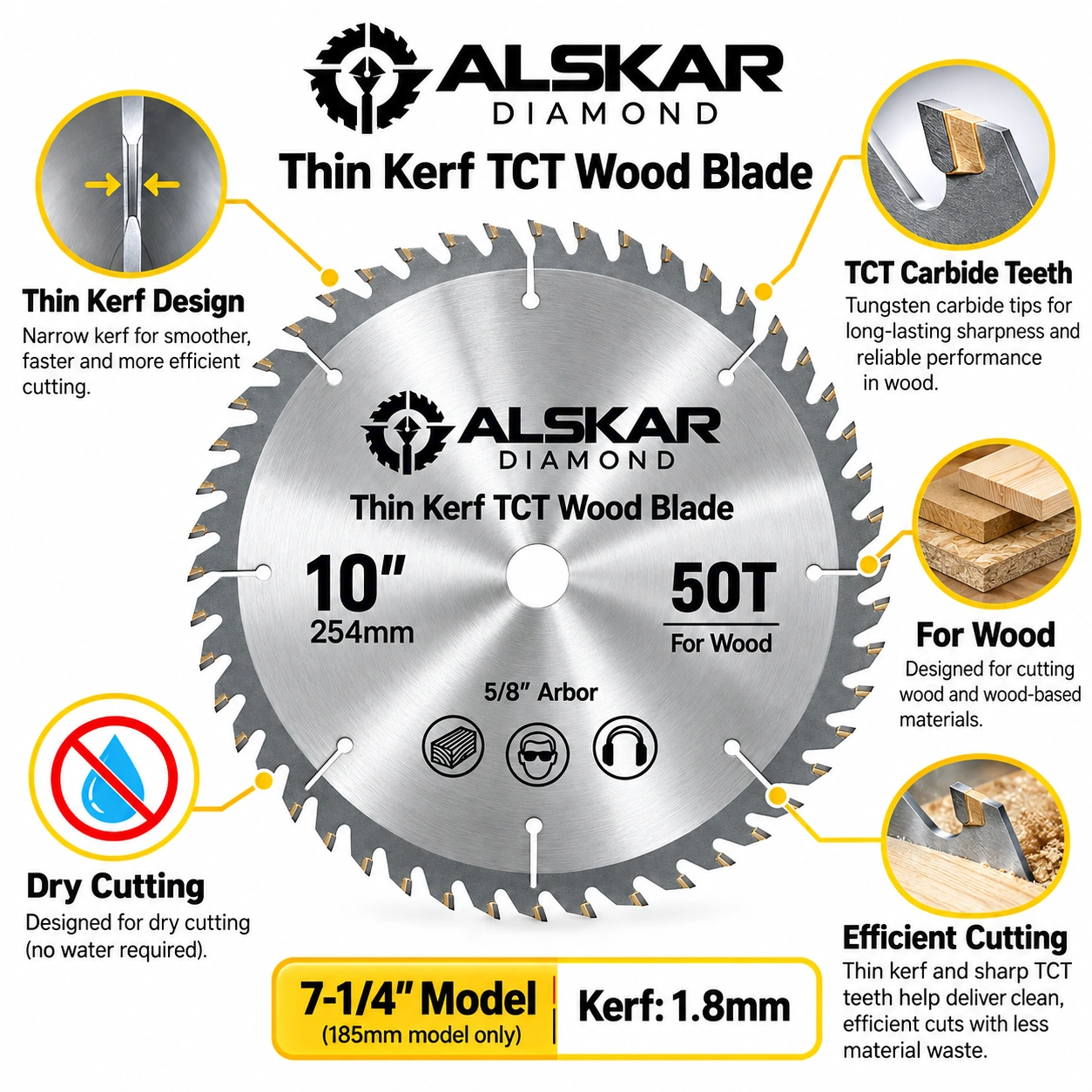
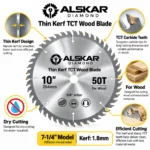
- Thin kerf design for reduced material waste
- Tungsten carbide tipped cutting teeth
- Designed for efficient wood cutting with lower cutting resistance under suitable conditions
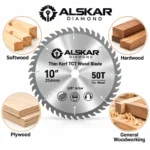
- Suitable for compatible softwood, hardwood, plywood, and wood-based panels
- Selected 40T configurations for versatile everyday cutting
- 50T combination option for rip cuts and crosscuts
- 6-1/2″, 7-1/4″, and 10″ planned configurations
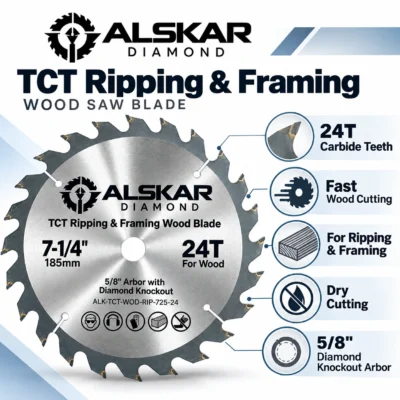
- 7-1/4″ model specified with a 5/8″ diamond knockout arbor
- Designed for compatible portable circular saws and woodworking equipment
- Dry cutting only
Important: Confirm the actual kerf, plate thickness, arbor configuration, maximum RPM, and machine compatibility before ordering. Final specifications and availability are subject to confirmation.
Thin Kerf TCT Wood Saw Blades
Efficient, Narrow-Kerf Cutting for Professional Woodworking
ALSKAR Thin Kerf TCT Wood Saw Blades are developed for professional woodworking applications where cutting efficiency, material utilization, and consistent cutting performance are important.
Compared with a wider-kerf blade of otherwise similar construction, a thin kerf blade removes less material during cutting and can help reduce cutting load under suitable operating conditions.
Featuring tungsten carbide tipped teeth and a narrow cutting profile, this Premium series is positioned for compatible portable circular saws, woodworking shops, general carpentry, and selected table saw applications.
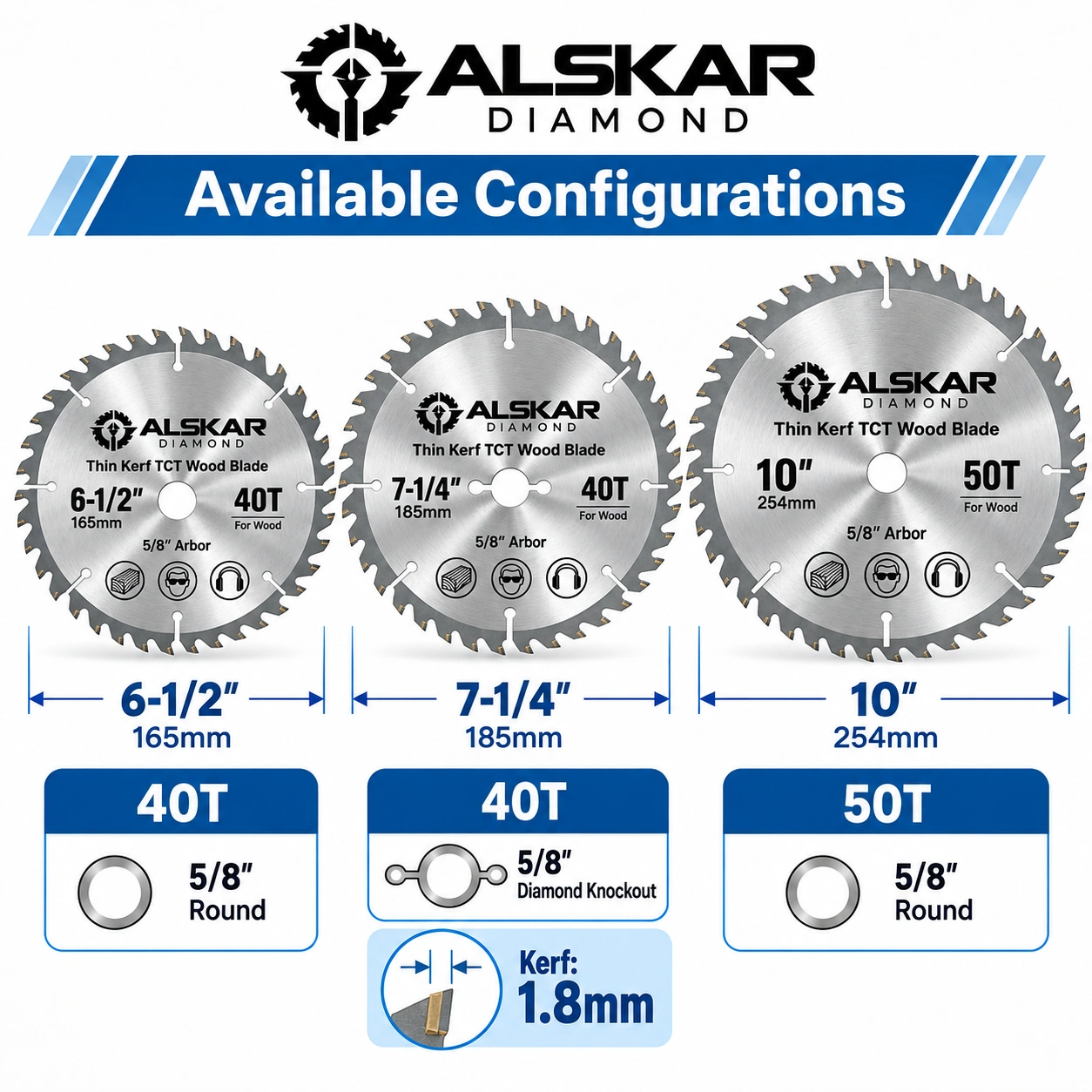
The planned series includes 6-1/2″ 40T, 7-1/4″ 40T, and 10″ 50T configurations to meet different cutting and machine requirements.
Key Features & Benefits
1. Thin Kerf Design
The primary feature of this series is its narrow cutting width.
A properly engineered thin kerf blade can reduce the volume of material removed during each cut compared with a comparable wider-kerf blade.
This can be beneficial where material utilization and cutting efficiency are important.
2. Efficient Cutting for Suitable Power Tools
Reducing cutting width can help lower cutting resistance under comparable cutting conditions.
This makes narrow-kerf blades particularly relevant for selected portable and cordless circular saw applications.
Actual power consumption depends on material, blade construction, sharpness, feed rate, and machine conditions.
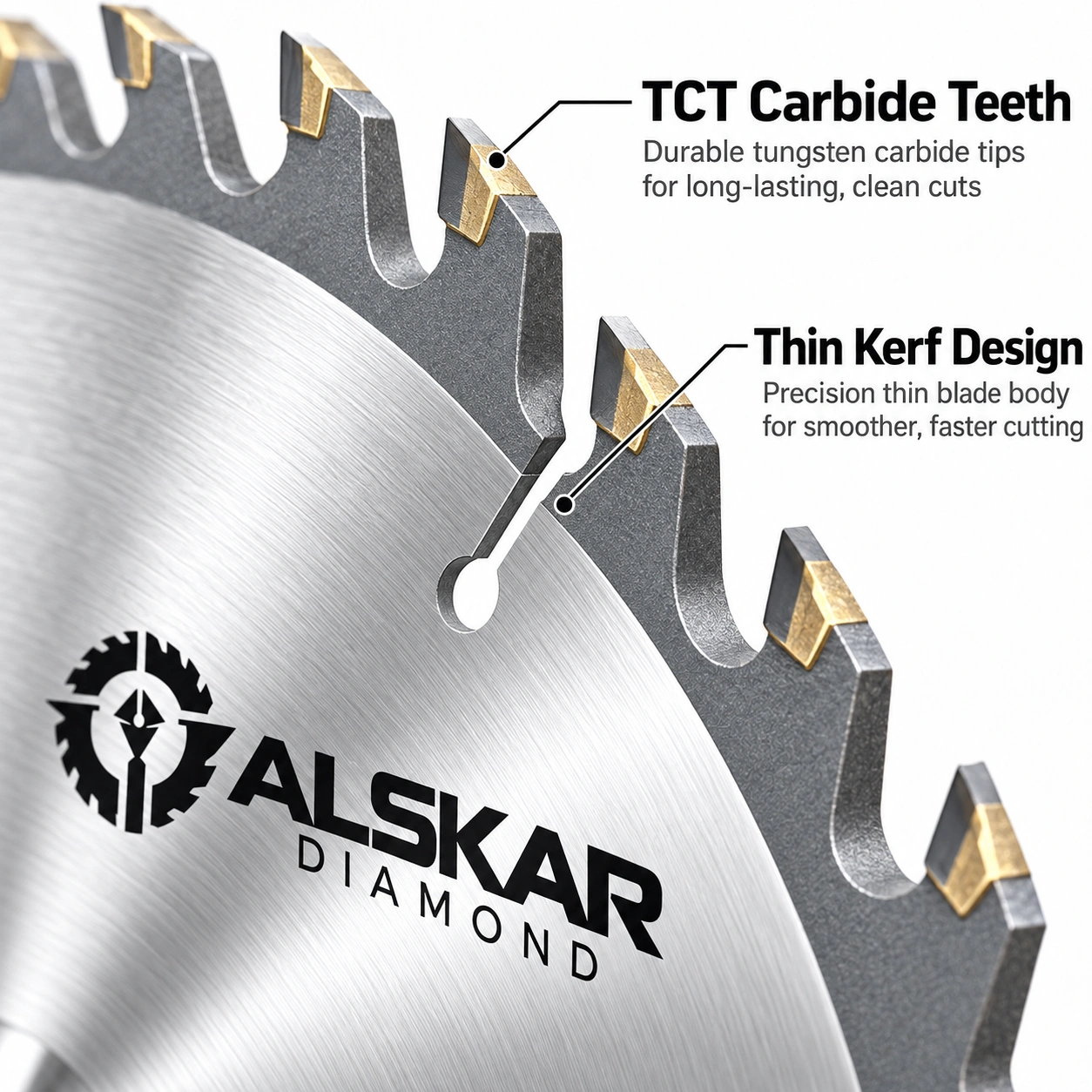
3. Tungsten Carbide Tipped Teeth
Tungsten carbide tips provide wear-resistant cutting edges for compatible woodworking materials.
The actual cutting performance and service life depend on the carbide grade, tooth geometry, cutting conditions, and blade maintenance.
4. Practical Tooth Count Options
The planned series includes two tooth-count configurations:
- 40T: General-purpose and selected crosscutting applications on compatible smaller saws.
- 50T: A versatile combination option for selected rip cuts and crosscuts on compatible 10″ woodworking equipment.
Final tooth-grind design must be matched to each model’s intended application.
5. Three Selected Blade Diameters
The planned range includes:
- 6-1/2″ (165mm) × 40T — 5/8″ Round Arbor
- 7-1/4″ (185mm) × 40T — 5/8″ Arbor with Diamond Knockout
- 10″ (254mm) × 50T — 5/8″ Round Arbor
Each configuration should be selected according to the saw manufacturer’s specified blade dimensions and mounting requirements.
6. Woodworking Material Versatility
Designed for selected softwood, hardwood, plywood, and compatible wood-based panels.
For demanding laminated, melamine-coated, or highly abrasive panel materials, a dedicated panel-cutting blade may provide better results.
Recommended Materials
- Softwood
- Hardwood
- Plywood
- Selected Veneered Wood Panels
- MDF, subject to blade configuration
- Particle Board, subject to blade configuration
- Other compatible wood-based materials
Material suitability depends on the selected model and actual cutting conditions.
This series is not intended for cutting steel, aluminum, concrete, masonry, or abrasive construction materials.
Recommended Applications
Cordless Circular Saw Cutting
Selected thin kerf configurations can be suitable for compatible cordless circular saws where reduced cutting resistance is beneficial.
General Woodworking
Versatile cutting in common wood and wood-based materials for carpentry and workshop applications.
Crosscutting
Cutting across the wood grain where an appropriate balance between cutting efficiency and surface finish is required.
Selected Rip Cutting
Compatible configurations may be used for ripping when the tooth design, machine setup, and material are suitable.
For heavy or continuous ripping, use a dedicated ripping blade where appropriate.
Wood Panel Cutting
Suitable for selected plywood and engineered wood cutting tasks when the blade is approved for the material.
Compatible Machines
Depending on the selected blade configuration:
- Handheld Circular Saws
- Cordless Circular Saws
- Compatible Table Saws
- Selected Professional Woodworking Saws
The saw must support the selected diameter, arbor, cutting width, blade plate thickness, operating speed, and intended cutting method.
For table saw applications, the blade and riving knife must be dimensionally compatible according to the machine manufacturer’s requirements.
Technical Specifications
| Specification | Details |
|---|---|
| Brand | ALSKAR DIAMOND |
| Product Type | Thin Kerf TCT Wood Saw Blade |
| Quality Grade | Premium |
| Diameter | 6-1/2″ / 7-1/4″ / 10″ |
| Tooth Count | 40T / 50T |
| Cutting Tips | Tungsten Carbide Tipped |
| Blade Body | Steel |
| Main Feature | Narrow Kerf Design |
| Cutting Method | Dry |
| Recommended Materials | Compatible Wood & Wood-Based Materials |
| 6-1/2″ Arbor | Proposed 5/8″ Round |
| 7-1/4″ Arbor | 5/8″ with Diamond Knockout |
| 10″ Arbor | Proposed 5/8″ Round |
| Kerf Width | To Be Confirmed by Model |
| Plate Thickness | To Be Confirmed by Model |
| Tooth Geometry | To Be Confirmed by Model |
| Hook Angle | To Be Confirmed by Model |
| Maximum RPM | Refer to Final Supplied Blade |
Thin Kerf vs. General Purpose Saw Blades
The main difference is blade cutting width, not simply diameter or tooth count.
Thin Kerf Series
Prioritizes a narrower cutting path and reduced material removal, subject to the final blade construction.
General Purpose & Combination Series
Prioritizes versatile everyday woodworking performance with a balance between speed and finish.
Some blade diameters and tooth counts may be offered in both series, but they should only be sold as separate products when their actual technical specifications differ.
How to Choose the Correct Thin Kerf Blade
Step 1 — Select the Diameter
Choose a blade diameter approved by your circular saw or woodworking machine.
Step 2 — Verify the Arbor
Check the saw spindle, blade center hole, mounting flanges, and any manufacturer-specific mounting requirements.
The planned 7-1/4″ configuration features a removable diamond knockout for compatible mounting systems.
Step 3 — Confirm Kerf & Plate Thickness
Verify the blade’s actual kerf and steel plate thickness.
For table saws equipped with a riving knife, follow the machine manufacturer’s required relationship between blade kerf, plate thickness, and riving knife thickness.
Step 4 — Choose the Tooth Configuration
Select 40T or 50T according to the blade diameter, cutting material, intended operation, and required finish.
Step 5 — Verify Machine Compatibility
Confirm the machine’s permitted diameter, arbor, rated operating speed, guarding requirements, and supported cutting operations.
Operating & Safety Recommendations
- Inspect the blade body, carbide teeth, and arbor before installation.
- Do not use blades with cracks, damaged tips, or deformation.
- Check that the actual blade diameter and arbor match the machine.
- Use correct mounting flanges and fastening hardware.
- Only remove a factory-provided diamond knockout when required by the approved mounting system.
- Do not exceed the maximum RPM marked on the supplied blade.
- Confirm kerf and plate-thickness compatibility with the saw.
- Verify riving knife compatibility when applicable.
- Follow the machine manufacturer’s instructions for correct rotation and blade guarding.
- Secure the workpiece and use proper cutting procedures.
- Use suitable eye, hearing, and respiratory protection.
- Maintain appropriate dust extraction.
- Do not cut nails, screws, metal, or materials outside the blade’s approved application.
Why Choose ALSKAR DIAMOND?
ALSKAR DIAMOND supplies professional cutting tools for woodworking, construction, stone fabrication, and industrial applications.
Our Thin Kerf TCT Wood Saw Blade Series is being developed around selected, commonly used woodworking saw configurations, with emphasis on cutting efficiency, machine compatibility, and practical professional applications.
For technical selection, availability, wholesale quotations, or distributor inquiries, contact ALSKAR DIAMOND with your required blade diameter, tooth count, kerf, arbor configuration, machine model, cutting material, and estimated quantity.
Frequently Asked Questions
What is a thin kerf TCT saw blade?
A thin kerf TCT saw blade uses tungsten carbide
tipped teeth and a relatively narrow cutting width.
Compared with an otherwise similar wider-kerf blade,
it removes less material during cutting.
What are the main benefits of a thin kerf blade?
A narrow kerf can help reduce material waste and
cutting resistance under comparable conditions.
Actual performance depends on blade construction,
material, sharpness, feed rate, and machine power.
What sizes and tooth counts are offered?
The planned ALSKAR range includes 6-1/2″ 40T,
7-1/4″ 40T, and 10″ 50T configurations.
Final specifications and availability must
be confirmed for each model.
Does the 7-1/4″ blade have a diamond knockout?
The 7-1/4″ configuration is specified with
a 5/8″ arbor and a removable diamond knockout.
Confirm the actual mounting configuration
and follow your saw manufacturer’s instructions
before removing the knockout.
Are thin kerf blades suitable for cordless saws?
Selected thin kerf blades may be suitable for
compatible cordless circular saws because a
narrower cut can reduce cutting load.
Always verify the blade diameter, arbor,
operating speed, and machine requirements.
Can thin kerf saw blades be used on table saws?
Selected configurations may be used on compatible
table saws.
The blade kerf, plate thickness, arbor, operating
speed, and riving knife must satisfy the saw
manufacturer’s requirements.
What is the difference between a thin kerf blade
and a standard general-purpose blade?
Thin kerf refers to cutting width, while general
purpose describes the intended cutting application.
A blade can be both thin kerf and general purpose.
Check the actual kerf measurement and tooth design
when comparing products.
What materials can these blades cut?
The series is intended for compatible softwood,
hardwood, plywood, and selected wood-based
panels, subject to the actual blade configuration.
It is not intended for metal, masonry, concrete,
or other abrasive construction materials.
What is the actual kerf width?
Kerf width depends on the specific model.
Please refer to the final technical specifications
or contact ALSKAR DIAMOND for the confirmed
measurement before ordering.
Are wholesale and distributor inquiries accepted?
Yes. Contact ALSKAR DIAMOND with the required
diameter, tooth count, arbor, kerf, machine
application, quantity, and destination market.
Final product specifications, availability,
and pricing will be confirmed during quotation.
| Blade Configuration | 6-1/2″ – 40T – 5/8″ Round, 7-1/4″ – 40T – 5/8″ Diamond Knockout, 10″ – 50T – 5/8″ Round |
|---|---|
| Quality Grade | Premium |
| Blade Type | Thin Kerf TCT Wood Saw Blade |
| Cutting Tips | Cutting Tips |
| Cutting Method | Dry |
| Application | General Woodworking |






Reviews
There are no reviews yet.