How to Choose the Right Diamond Saw Blade for Concrete, Asphalt and Masonry

How to Choose the Right Diamond Saw Blade for Concrete, Asphalt and Masonry
A Professional Guide to Blade Selection, Bond Hardness, Cutting Methods and Saw Compatibility
Choosing the right diamond saw blade is one of the most important decisions in concrete cutting, asphalt paving, and masonry construction.
The correct blade can deliver efficient cutting, consistent performance, and predictable service life. The wrong blade may cut slowly, glaze over, wear prematurely, or increase stress on the saw and operator.
However, choosing a diamond blade involves more than selecting the correct diameter.
Professional contractors should consider the material being cut, aggregate characteristics, diamond bond, segment design, cutting conditions, and saw specifications.
In this guide, ALSKAR DIAMOND explains how to select the right diamond saw blade for concrete, asphalt, brick, block, and other common construction materials.
1. Understand How a Diamond Saw Blade Works
Unlike a traditional toothed saw blade, a diamond saw blade cuts primarily through abrasion.
Industrial diamond crystals are held within a metal bond or cutting rim. As the blade works against the material, the exposed diamonds perform the cutting action.
Over time, the surrounding bond wears away, exposing fresh diamond particles that can continue cutting.
This process depends on the relationship between three important factors:
- Diamond characteristics: The size, concentration, strength, and quality of the diamonds influence cutting performance.
- Metal bond: The surrounding matrix determines how quickly worn diamonds are released and new cutting points are exposed.
- Material characteristics: Hardness and abrasiveness influence cutting resistance and segment wear.
A blade must maintain an effective balance between exposing new diamonds and retaining enough of the segment for a reasonable service life.
This is why no single diamond saw blade is ideal for every construction material.
2. Identify the Material You Need to Cut
Before selecting a diamond blade, determine exactly what material you will be cutting.
Concrete, asphalt, and masonry have different mechanical and abrasive characteristics.
Cutting Cured Concrete
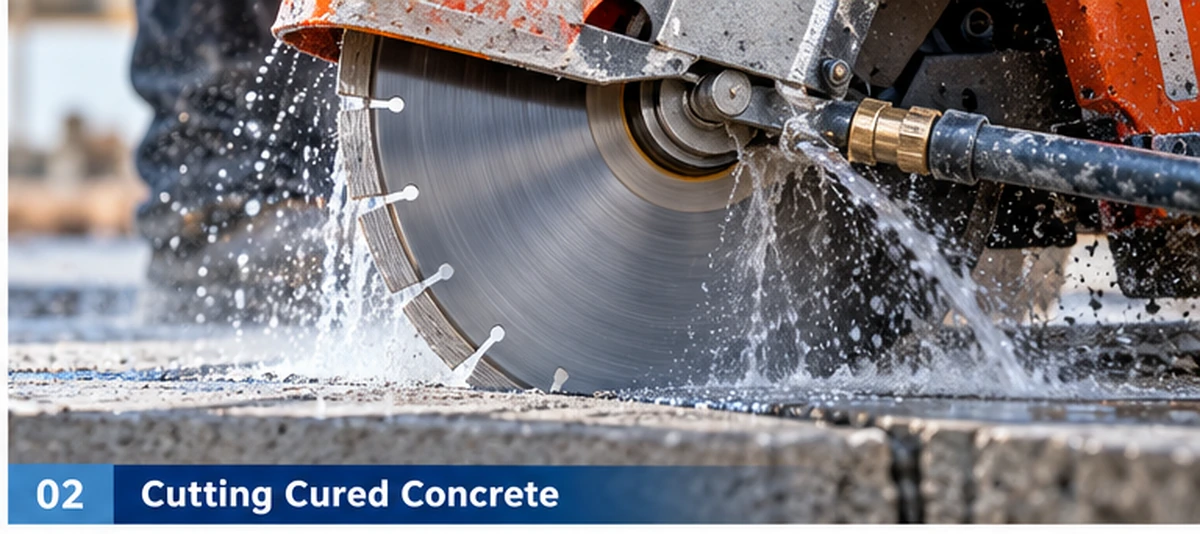
Cured concrete can be challenging because of the aggregates embedded in the cement matrix.
Granite, quartz, river gravel, limestone, and other aggregates can produce different cutting conditions.
Hard, low-abrasion aggregates can cause blade glazing if the metal bond does not wear fast enough to expose fresh diamonds.
For demanding cured concrete applications, a blade with an appropriately softer bond is often preferred.
However, aggregate hardness is not the only factor. Sand abrasiveness, concrete age, reinforcement, and saw power also affect blade selection.
Recommended blade category: Concrete diamond saw blades with a bond matched to aggregate hardness and cutting conditions.
Cutting Reinforced Concrete
Reinforced concrete introduces additional challenges because the blade may encounter steel reinforcement during cutting.
A blade intended for reinforced concrete should be specifically designed and rated for that application.
Segment construction, core integrity, bond characteristics, cooling, and operating conditions are all important.
Do not assume that every general-purpose concrete blade is suitable for cutting rebar.
Recommended blade category: Diamond saw blades specifically approved for reinforced concrete.
Cutting Asphalt
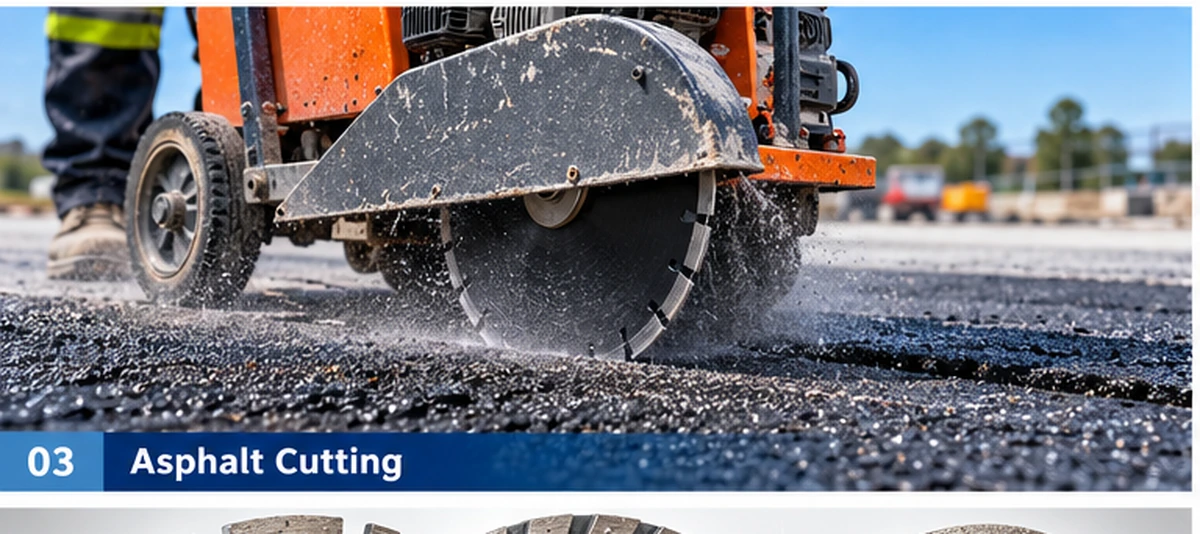
Asphalt is generally more abrasive to diamond cutting segments than dense cured concrete.
Its abrasive characteristics can cause rapid bond wear, especially when an unsuitable concrete blade is used.
Asphalt blades commonly use a harder, more wear-resistant bond to control segment consumption.
Many asphalt blades also incorporate undercut protection designed to reduce premature wear of the steel core directly beneath the segments.
Recommended blade category: Asphalt diamond saw blades with an abrasion-resistant bond and appropriate undercut protection.
Cutting Brick, Concrete Block and Masonry
Masonry materials vary considerably.
Clay brick, concrete block, pavers, and hard architectural masonry can require different blade characteristics.
Soft, abrasive concrete masonry units may produce rapid segment wear, while dense, hard brick or pavers can require a different bond formulation.
For contractors regularly working with several masonry materials, a general-purpose masonry blade can be convenient, provided its published application range includes the materials involved.
Recommended blade category: General-purpose masonry diamond blades or specialized blades matched to the specific masonry material.
3. Understand Diamond Blade Bond Hardness

One of the most important principles in diamond blade selection is the relationship between material characteristics and bond hardness.
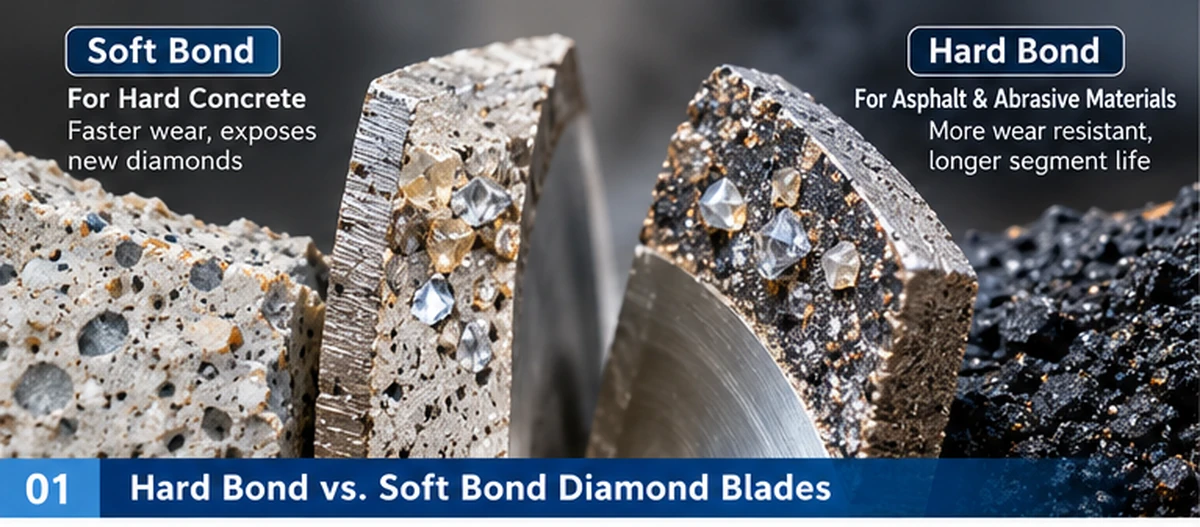
The metal bond holds the diamonds in position while gradually wearing away during cutting.
A softer bond wears more readily, helping expose new diamond cutting points.
A harder bond resists abrasion and generally retains the diamonds longer.
The basic selection principle is:
Hard, less-abrasive materials often require a softer bond. Soft, highly abrasive materials often require a harder bond.
This may seem counterintuitive, but the explanation is straightforward.
When cutting hard aggregate, the surrounding bond may wear too slowly. A softer bond helps maintain diamond exposure.
When cutting highly abrasive asphalt, the bond may wear too rapidly. A harder bond helps reduce premature segment loss.
| Cutting Condition | General Bond Selection | Primary Objective |
|---|---|---|
| Hard cured concrete with hard aggregate | Softer bond | Maintain diamond exposure |
| Medium-hard cured concrete | Medium or application-matched bond | Balance cutting speed and blade life |
| Softer, abrasive concrete | More wear-resistant bond | Control segment wear |
| Asphalt | Hard, abrasion-resistant bond | Reduce premature wear |
| Green concrete | Bond designed for abrasive early-age concrete | Preserve cutting performance and segment life |
| Mixed masonry | Material-specific or general-purpose bond | Balance versatility and performance |
Important: These are general selection principles, not universal specifications. Different manufacturers use different bond systems, and actual performance depends on the entire cutting application.
4. Choose the Right Diamond Blade Segment Design
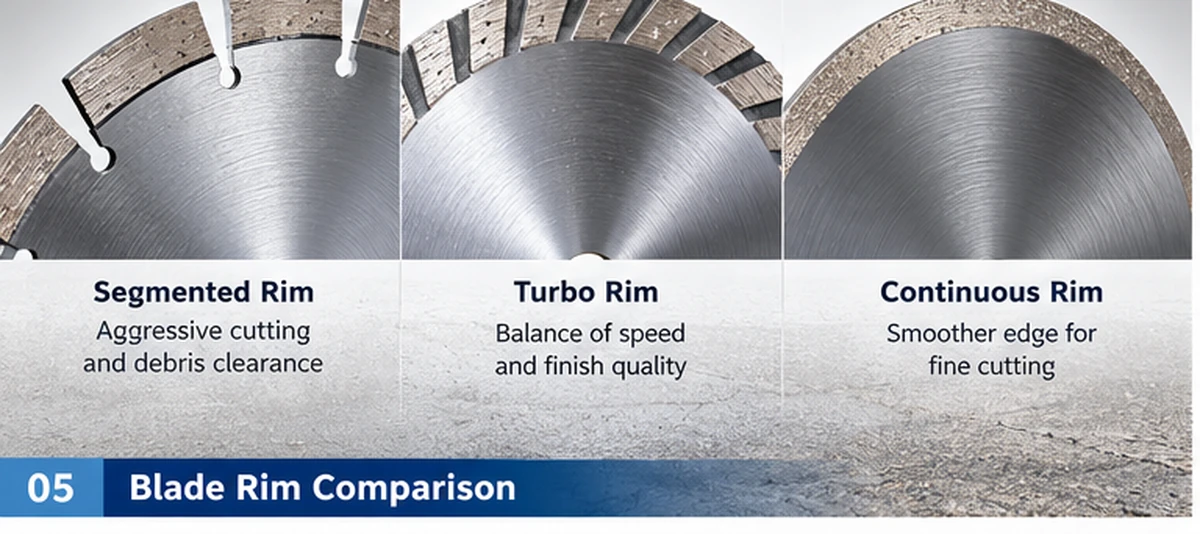
The segment or rim design affects cutting behavior, debris clearance, heat management, and finish quality.
Three common designs are segmented rims, turbo rims, and continuous rims.
Segmented Diamond Blades
Segmented blades feature individual cutting segments separated by gullets.
These spaces help clear cutting debris and support cooling.
Segmented designs are widely used for concrete, asphalt, brick, and general construction applications.
Their aggressive cutting characteristics make them popular with contractors who prioritize productivity.
They may produce a rougher edge than a blade specifically designed for fine finishing.
Turbo Diamond Blades
Turbo blades feature a continuous or segmented rim with a patterned cutting surface.
Depending on the specific design, turbo blades can offer a balance between cutting speed, debris removal, and edge quality.
They are commonly used for concrete, masonry, stone, and related applications.
A turbo rim is not automatically suitable for every material. Always confirm the blade’s approved application.
Continuous Rim Diamond Blades
Continuous rim blades are often selected when a smoother edge is important.
They are commonly associated with ceramic tile, porcelain, and certain stone-cutting applications.
A continuous rim should not automatically be selected for demanding structural concrete or asphalt cutting simply because it produces a smooth finish.
Quick Segment Design Comparison
| Blade Design | Typical Strength | Common Applications |
|---|---|---|
| Segmented rim | Aggressive cutting and debris clearance | Concrete, asphalt, general masonry |
| Turbo rim | Balance of cutting speed and finish | Concrete, masonry, stone |
| Continuous rim | Smooth cutting edges | Tile, porcelain, selected stone |
The specific blade specification takes priority over its general rim category.
5. Wet Cutting vs. Dry Cutting
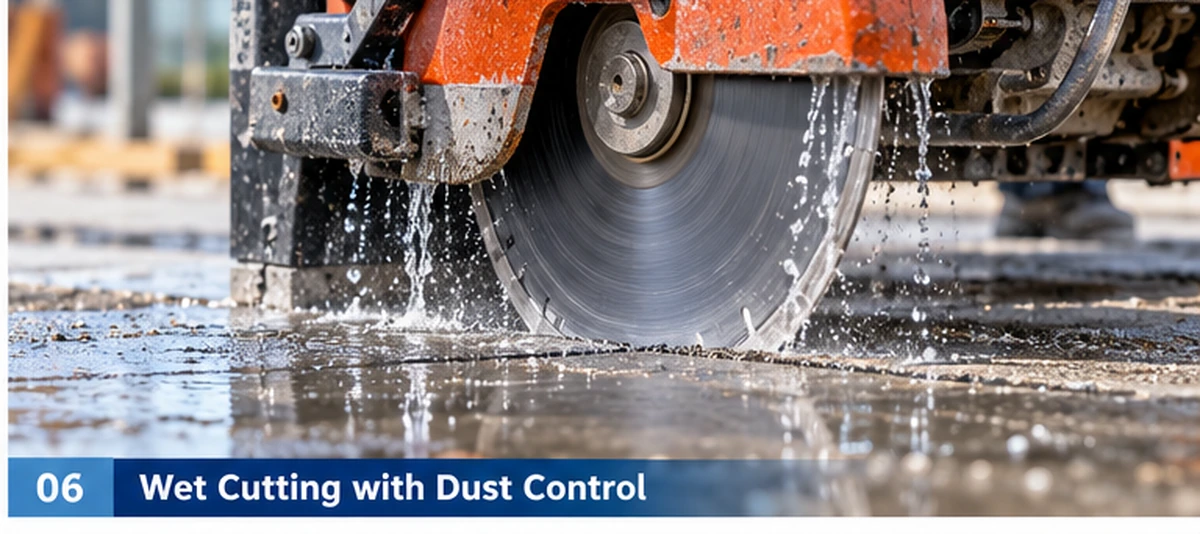
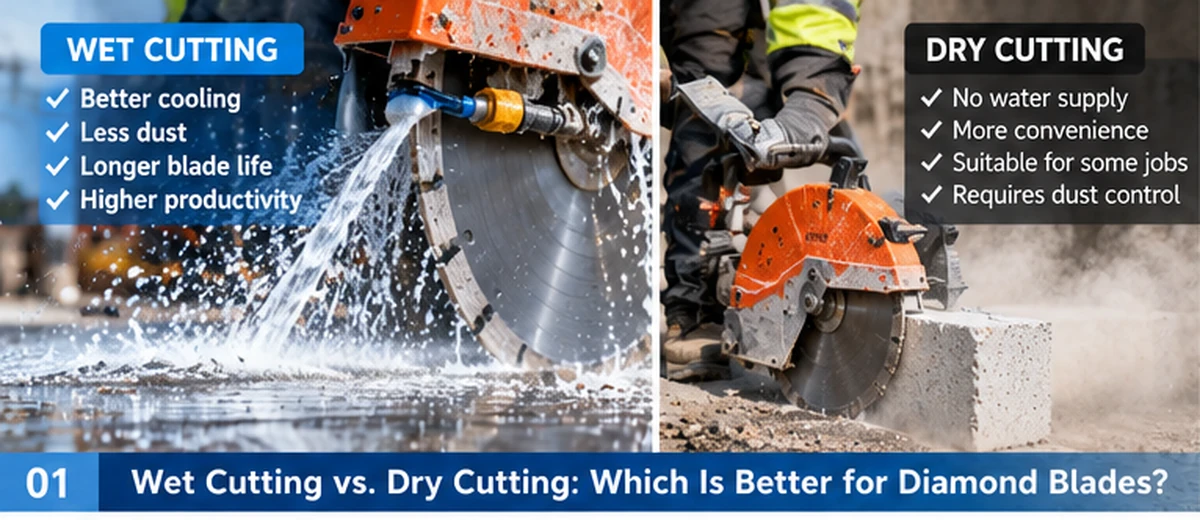
Another important decision is whether to use a wet-cutting or dry-cutting diamond blade.
Wet Cutting
Wet cutting uses a controlled water supply during operation.
Water can help cool the blade, remove cutting debris, and reduce airborne dust generation.
It is commonly used with walk-behind saws, masonry saws, and professional concrete-cutting equipment.
Wet cutting is especially useful in demanding applications when the saw and blade are designed for water-fed operation.
Dry Cutting
Dry cutting is used when the blade and equipment are specifically rated for operation without water.
Suitable dry-cutting blades are designed to withstand the intended thermal and mechanical conditions, subject to the manufacturer’s operating instructions.
Dry cutting does not eliminate the need for dust control.
When cutting concrete, brick, block, or other silica-containing materials, employers must follow applicable OSHA requirements for controlling respirable crystalline silica.
Depending on the tool and task, these may require integrated water delivery, approved dust collection, respiratory protection, or another compliant exposure-control approach.
Can a Wet Diamond Blade Be Used Dry?
Never use a blade marked for wet cutting only without the required water supply.
A blade rated for both wet and dry operation may be used under either approved condition, provided the saw manufacturer’s instructions permit it.
Always follow the blade’s specific wet/dry designation and operating limits.
6. Select the Correct Blade Diameter and Arbor
A diamond blade must be physically compatible with the saw.
Important specifications include:
- Blade diameter
- Arbor hole size and configuration
- Maximum operating RPM
- Blade thickness and cutting width
- Required rotation direction
- Saw type and available power
- Guard and flange compatibility
- Approved wet or dry operation
Common construction blade diameters include 12″, 14″, 16″, 18″, 20″, and 24″, while specialized walk-behind applications may use substantially larger diameters.
However, diameter alone does not determine compatibility.
For example, a 14-inch blade intended for a high-speed handheld saw should not automatically be used on another saw type simply because the diameter matches.
The blade’s maximum rated RPM must be at least as high as the saw’s maximum operating spindle RPM.
Always confirm the correct arbor fit, mounting arrangement, blade guard, and manufacturer-approved operating conditions.
Never exceed the maximum marked blade speed or use an improvised arbor adapter.
7. Match the Diamond Blade to the Saw
Different machines impose different operating conditions.
High-Speed Handheld Saws
Handheld cutoff saws are commonly used for construction repair, utility work, and general concrete or masonry cutting.
Choose a blade approved for the saw’s diameter, arbor, speed, cutting mode, and intended material.
Walk-Behind Saws
Walk-behind saws are often used for floor slabs, pavement, joints, and large concrete or asphalt cutting projects.
Saw horsepower, blade diameter, bond formulation, and operating conditions become particularly important.
A blade designed for a lower-horsepower walk-behind saw may not be appropriate for a high-horsepower machine.
Masonry Saws
Masonry saws are designed for cutting bricks, blocks, pavers, and related materials.
Choose a blade based on the actual masonry material and equipment specifications.
A blade optimized for dense hard pavers may behave differently when cutting highly abrasive concrete blocks.
8. Diamond Blade Selection Chart by Material
The following chart provides general guidance for common contractor applications.
| Material | Recommended Blade Category | Key Consideration |
|---|---|---|
| Cured concrete | Concrete diamond blade | Match bond to aggregate hardness |
| Hard aggregate concrete | Concrete blade with suitable softer bond | Maintain diamond exposure |
| Reinforced concrete | Reinforced-concrete-rated blade | Confirm suitability for rebar |
| Asphalt pavement | Asphalt diamond blade | Abrasion resistance and undercut protection |
| Green concrete | Early-entry or green-concrete-rated blade | Match cutting timing and abrasive conditions |
| Clay brick | Masonry diamond blade | Match brick hardness |
| Concrete block (CMU) | Abrasive-masonry-rated blade | Control segment wear |
| Concrete pavers | Concrete or masonry blade | Consider density and aggregate |
| Mixed concrete and asphalt | Approved combination blade | Balance versatility and service life |
For repeated production cutting in one material, a specialized blade will often be a better choice than a universal blade.
For occasional mixed-material cutting, an appropriately rated combination blade may provide greater convenience.
9. Common Diamond Blade Selection Mistakes
Mistake 1: Using an Asphalt Blade for Every Concrete Job
An asphalt blade typically has a wear-resistant bond intended for abrasive materials.
When used on very hard concrete, it may fail to expose fresh diamonds efficiently, resulting in slow cutting or glazing.
Mistake 2: Choosing Only by Blade Price
The lowest purchase price does not necessarily represent the lowest cutting cost.
Contractors should consider blade life, cutting productivity, labor time, downtime, and the number of blades required to complete the job.
Mistake 3: Ignoring Aggregate Hardness
Two concrete slabs with similar compressive strength may behave differently during cutting because of differences in aggregate mineralogy and abrasiveness.
Mistake 4: Overlooking Saw Compatibility
Using an incorrect arbor, unsuitable diameter, or blade with an inadequate RPM rating can create serious equipment and safety risks.
Mistake 5: Using an Unsuitable Blade for Reinforced Concrete
Steel reinforcement requires an application-approved blade and appropriate cutting technique.
Do not assume all segmented blades are rebar-rated.
Mistake 6: Neglecting Dust Control
Concrete and masonry cutting may generate respirable crystalline silica.
Use appropriate engineering controls and follow the applicable OSHA standard, equipment instructions, and jobsite safety procedures.
10. Selecting ALSKAR DIAMOND Blades for Your Application
ALSKAR DIAMOND offers multiple blade designs for professional cutting applications.
Instead of selecting a blade based solely on appearance or segment height, buyers should start with the material, equipment, and cutting conditions.
General-Purpose Concrete and Masonry Blades
For common concrete and masonry applications, ALSKAR general-purpose segmented blades provide options for contractors who need a practical blade matched to their saw and material.
Suitable product options should be selected according to the published application range of each blade.
Dedicated Asphalt Blades
For asphalt pavement, ALSKAR offers asphalt-cutting blade options designed around abrasive cutting conditions.
Features available on selected models include slanted undercut protection and segmented cutting designs.
Professional Walk-Behind Concrete Blades
For floor saws and demanding concrete applications, ALSKAR offers professional concrete blade series with different bond selections and horsepower ranges.
Selecting the correct bond for the aggregate and machine is especially important in these applications.
Combination Blades
For contractors regularly cutting several approved materials, ALSKAR combination blade designs provide alternatives to carrying a separate blade for every occasional cutting task.
However, a combination blade should not be assumed to outperform a dedicated blade in every material.
Need help selecting a diamond saw blade?
Share the material being cut, aggregate type if known, saw model, horsepower, blade diameter, arbor size, wet or dry cutting conditions, and expected cutting volume.
The ALSKAR DIAMOND team can help you narrow down the appropriate blade series for your application.
11. Final Diamond Blade Selection Checklist
Before purchasing or installing a diamond blade, verify the following:
- Identify the material and its abrasiveness.
- Determine whether the concrete is cured, green, or reinforced.
- Consider the hardness and type of aggregate.
- Select a suitable bond and segment design.
- Confirm the approved wet or dry cutting method.
- Match the blade diameter and arbor to the machine.
- Confirm the blade’s rated RPM is compatible with the saw.
- Verify the blade is suitable for the intended cutting application.
- Plan appropriate dust controls and protective equipment.
- Evaluate blade performance based on total cutting cost, not purchase price alone.
The best diamond saw blade is the one correctly matched to the material, saw, and operating conditions—not necessarily the blade with the highest price or the tallest segment.
Frequently Asked Questions
What is the best diamond saw blade for cutting concrete?
The best blade depends on aggregate hardness, abrasiveness, reinforcement, saw type, and operating conditions. Choose a concrete blade with the appropriate bond and machine compatibility.
Can I use a concrete diamond blade to cut asphalt?
Only when the blade is specifically approved for asphalt. Dedicated asphalt blades are generally preferable for extensive asphalt cutting because of the material’s abrasive characteristics.
What blade should I use for reinforced concrete?
Select a blade specifically rated for reinforced concrete and compatible with your saw. Always follow the manufacturer’s instructions for cutting steel reinforcement.
What is the difference between hard-bond and soft-bond diamond blades?
Hard bonds resist abrasion and retain diamonds longer. Soft bonds wear faster to expose fresh diamonds. Hard materials often require softer bonds, while highly abrasive materials commonly benefit from harder bonds.
Are segmented diamond blades better than turbo blades?
Neither design is always better. Segmented blades are commonly used for aggressive cutting, while turbo blades can balance cutting speed and edge finish. Always match the blade to the material.
Can I use a wet-cut diamond blade without water?
No. A blade marked for wet cutting only must be operated with the required water supply. Always follow the product’s wet/dry designation.
Why does my diamond blade cut slowly?
Possible causes include an unsuitable bond, glazed segments, incorrect blade application, inadequate saw power, and blade wear. Stop cutting and inspect the blade and equipment.
Does a taller diamond segment always mean longer blade life?
No. Service life depends on usable diamond depth, diamond properties, bond characteristics, material abrasiveness, and operating conditions—not segment height alone.
Explore ALSKAR DIAMOND Saw Blades
Find diamond saw blades for concrete, asphalt, masonry, and professional cutting applications.
For application-specific recommendations, contact ALSKAR DIAMOND with your saw specifications and cutting requirements.
Technical note: This guide provides general product-selection information. Always follow the blade and equipment manufacturers’ instructions and applicable workplace safety requirements.