Why Is My Diamond Blade Not Cutting? Causes and Solutions

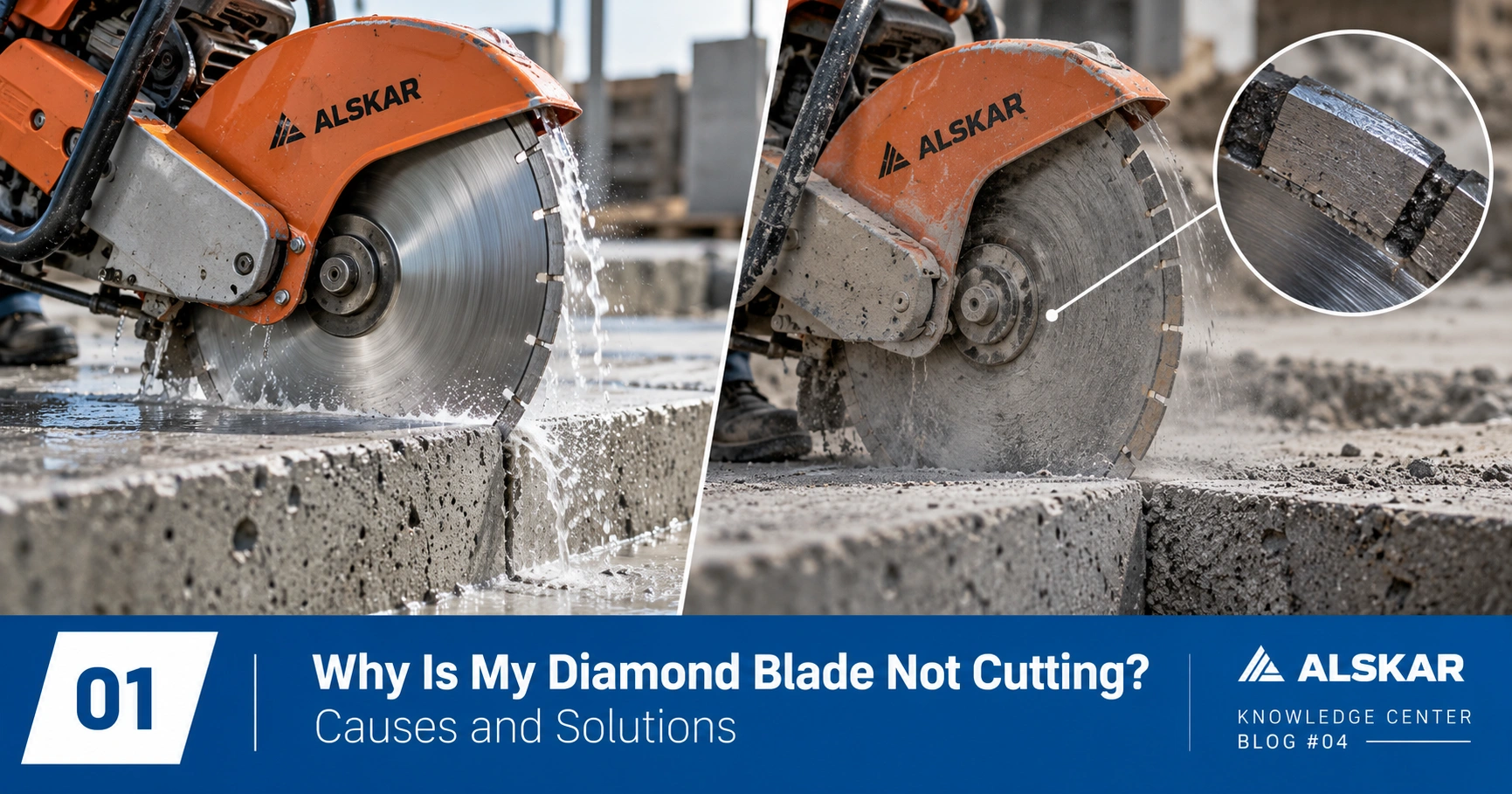
Why Is My Diamond Blade Not Cutting? Causes and Solutions
A Professional Troubleshooting Guide for Slow Cutting, Blade Glazing, Overheating, and Premature Diamond Blade Wear
Your diamond saw blade was cutting concrete efficiently, but now it barely cuts. The segments still appear to have usable height, yet the saw requires more effort and cutting productivity has dropped.
Does this mean the diamond blade is worn out?
Not necessarily.
A diamond blade that stops cutting may be experiencing glazing, an incorrect bond selection, insufficient saw power, inadequate cooling, or another operating problem.
Understanding the difference can help contractors reduce downtime, avoid unnecessary blade replacement, and improve cutting performance.
In this guide, ALSKAR DIAMOND explains why diamond blades stop cutting, how to identify common symptoms, and when to correct operating conditions or replace the blade.
1. How Do You Know Your Diamond Blade Is Not Cutting Properly?
Diamond blades cut by exposing industrial diamond particles held within a metal bond or cutting rim.
As the diamonds become worn, controlled wear of the surrounding bond allows fresh cutting points to become exposed.
When this balance is disrupted, cutting performance may decline.
Common warning signs include:
- Slower cutting than expected
- The saw requiring excessive force
- Smooth or polished cutting segments
- Unusual heat buildup
- Abnormal vibration or unstable cutting
- Uneven segment wear
- Burning odors or discoloration
- Visible blade cracks or damaged segments
Some symptoms indicate application or maintenance problems. Others may indicate structural blade damage.
Safety first: If a blade develops unusual vibration, visible cracks, loose segments, severe distortion, or signs of structural damage, stop cutting immediately. Shut down and isolate the saw according to the equipment manufacturer’s instructions before inspecting the blade. Never continue using a damaged diamond blade.
2. Common Diamond Blade Problems: Quick Diagnosis Chart
Use the following table as a starting point.
| Symptom | Possible Cause | Recommended Action |
|---|---|---|
| Blade cuts very slowly | Bond too hard for the material | Check application rating and consider a suitable softer bond |
| Segments look smooth or polished | Diamond blade glazing | Inspect and follow approved blade dressing instructions if applicable |
| Blade overheats | Inadequate cooling or excessive cutting load | Stop, inspect, and correct the operating conditions |
| Blade wears out quickly | Bond too soft or material highly abrasive | Select a more abrasion-resistant, application-matched blade |
| Blade vibrates excessively | Mounting, arbor, bearings, or blade damage | Stop and inspect the saw and blade |
| Uneven segment wear | Cooling imbalance, alignment, or equipment problems | Check water delivery, alignment, and saw condition |
| Blade stalls or bogs down | Excessive feed load or insufficient available power | Reduce load and check equipment specifications |
| Segment cracks or becomes loose | Structural damage or unsuitable operating conditions | Remove the blade from service |
| Blade appears worn but still has segment height | Glazing or remaining non-cutting segment support | Inspect usable diamond-bearing material and replace if necessary |
The same symptom can have several causes. Do not diagnose a blade based on appearance alone.
3. Diamond Blade Glazing: A Common Cause of Slow Cutting
One of the most common reasons a diamond blade stops cutting efficiently is glazing.
What Is Diamond Blade Glazing?
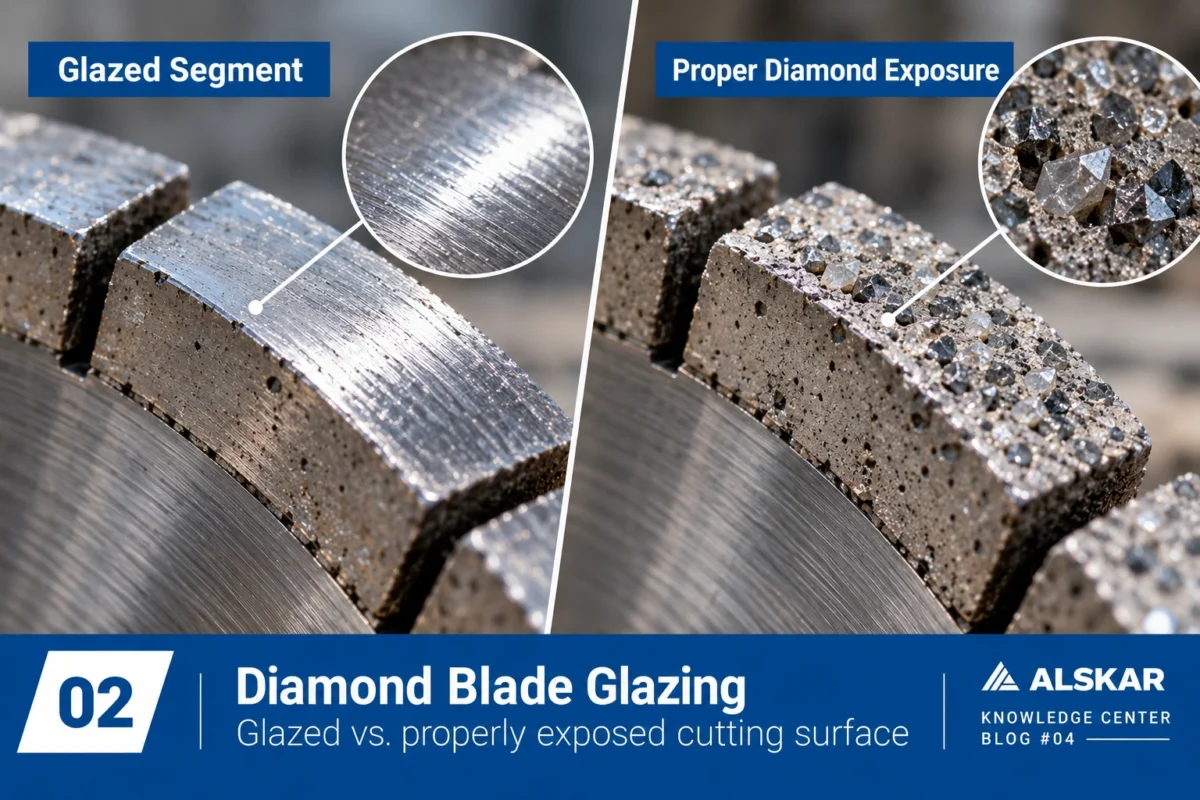
Glazing occurs when the effective diamond cutting points become dull or insufficiently exposed.
The cutting edge may appear unusually smooth or polished.
Instead of cutting efficiently, the blade rubs against the material, generating friction while removing less material.
What Causes Blade Glazing?
Common contributing factors include:
- A bond that is too hard or wear-resistant for the material
- Hard, relatively less-abrasive concrete
- Incorrect cutting conditions
- Inadequate saw power
- An unsuitable blade application
- Incorrect operating speed or feed technique
For example, a diamond blade engineered for abrasive asphalt may use a relatively hard metal bond.
When used on hard cured concrete, the bond may wear too slowly to expose fresh diamonds effectively.
This can cause glazing and reduced cutting speed.
How Do You Fix a Glazed Diamond Blade?
First, stop cutting and inspect the blade and equipment.
Confirm that the blade is suitable for the material, saw, and cutting method.
Some manufacturers permit dressing a glazed blade using a specified abrasive dressing block or other approved material.
Dressing removes a controlled amount of the surrounding bond to expose fresh diamond cutting points.
Only dress a blade if the manufacturer specifically permits the procedure, and follow its approved equipment, guarding, dust-control, and operating instructions.
Do not attempt to restore a blade that is cracked, distorted, missing segments, or otherwise structurally damaged.
If glazing repeatedly returns, the blade specification may be unsuitable for the material. An application-matched blade with a softer bond may be required.
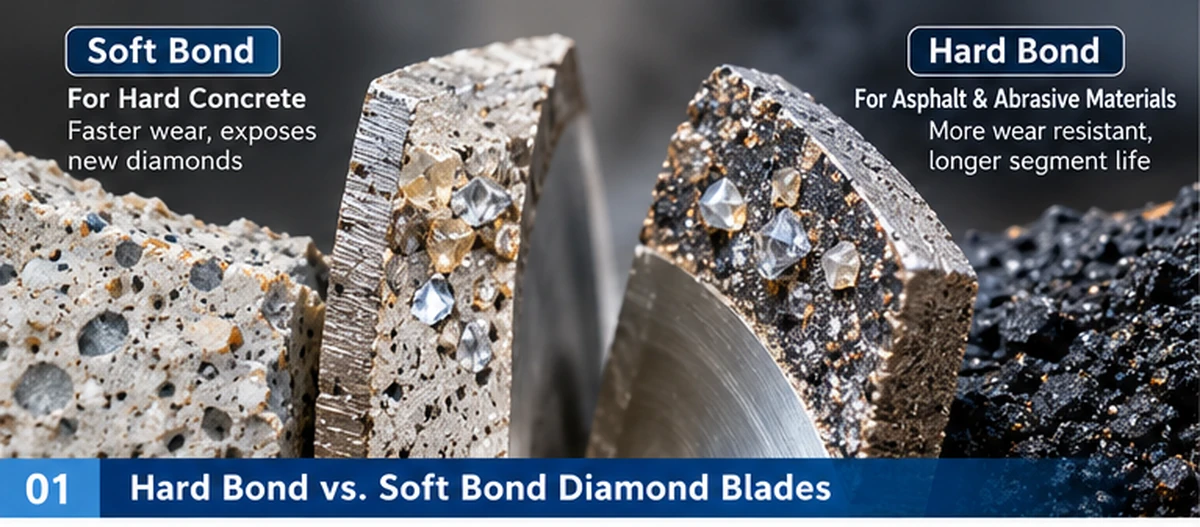
4. The Diamond Blade Bond May Be Too Hard
The relationship between blade bond and material hardness is often misunderstood.
Hard concrete frequently requires a softer diamond blade bond.
A softer bond wears more readily to expose fresh diamond particles.
A harder bond generally offers greater resistance to abrasive wear.
When the bond is too resistant to wear for the cutting material, diamond exposure may become inadequate.
The blade may still have substantial segment height but cut inefficiently.
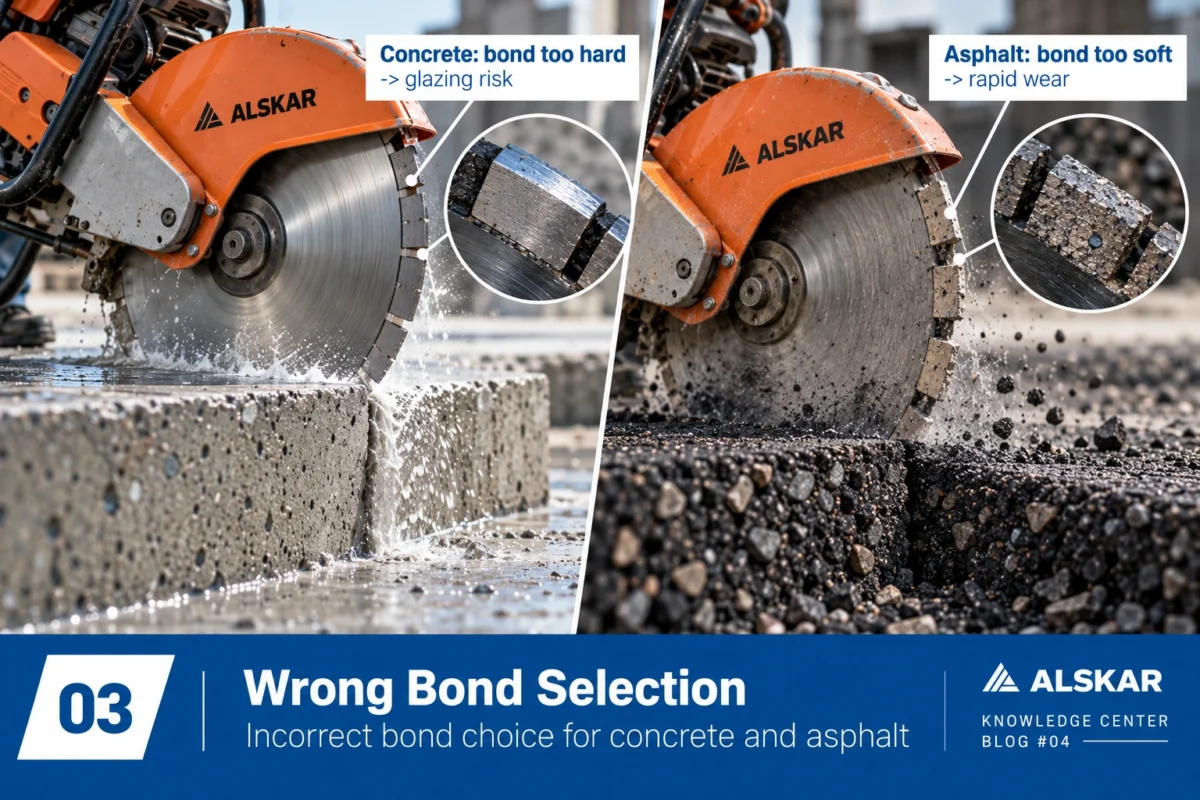
Typical Example: Hard Aggregate Concrete
Hard cured concrete containing quartz-rich or certain granite aggregates can create demanding cutting conditions.
Depending on overall abrasiveness, a blade with a relatively softer bond may maintain diamond exposure more effectively.
However, aggregate hardness alone is not enough to determine the correct bond.
Sand abrasiveness, concrete age, reinforcement, saw power, and operating conditions must also be considered.
What Should You Do?
Check the manufacturer’s bond selection recommendations.
If the blade consistently glazes despite correct operation, switch to a blade specification designed for the material.
Do not attempt to compensate for an incorrect bond by forcing the saw through the cut.
Learn more about how bond hardness affects blade performance in our Hard Bond vs. Soft Bond Diamond Blade Guide.
5. The Blade May Be Too Soft for the Material
An overly soft bond usually produces a different problem.
Instead of cutting slowly because of insufficient diamond exposure, the segment may wear away too rapidly.
This is commonly associated with highly abrasive materials.
Typical Example: Asphalt Cutting
Asphalt can abrade the diamond segment matrix rapidly.
A blade intended primarily for hard cured concrete may have insufficient bond wear resistance for certain asphalt applications.
The resulting premature segment consumption can significantly reduce usable blade life.
How to Correct the Problem
Choose a blade specifically designed for the abrasive material.
For asphalt, look for the manufacturer’s asphalt application rating and appropriate undercut protection.
Always verify blade diameter, arbor, maximum RPM, and saw compatibility.
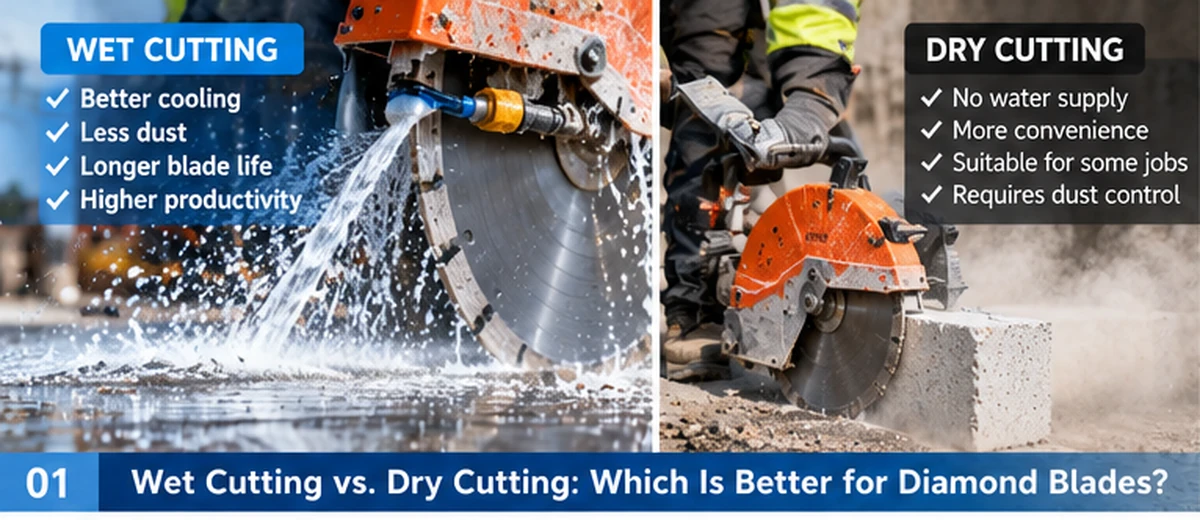
6. Insufficient Water Cooling Can Reduce Cutting Performance
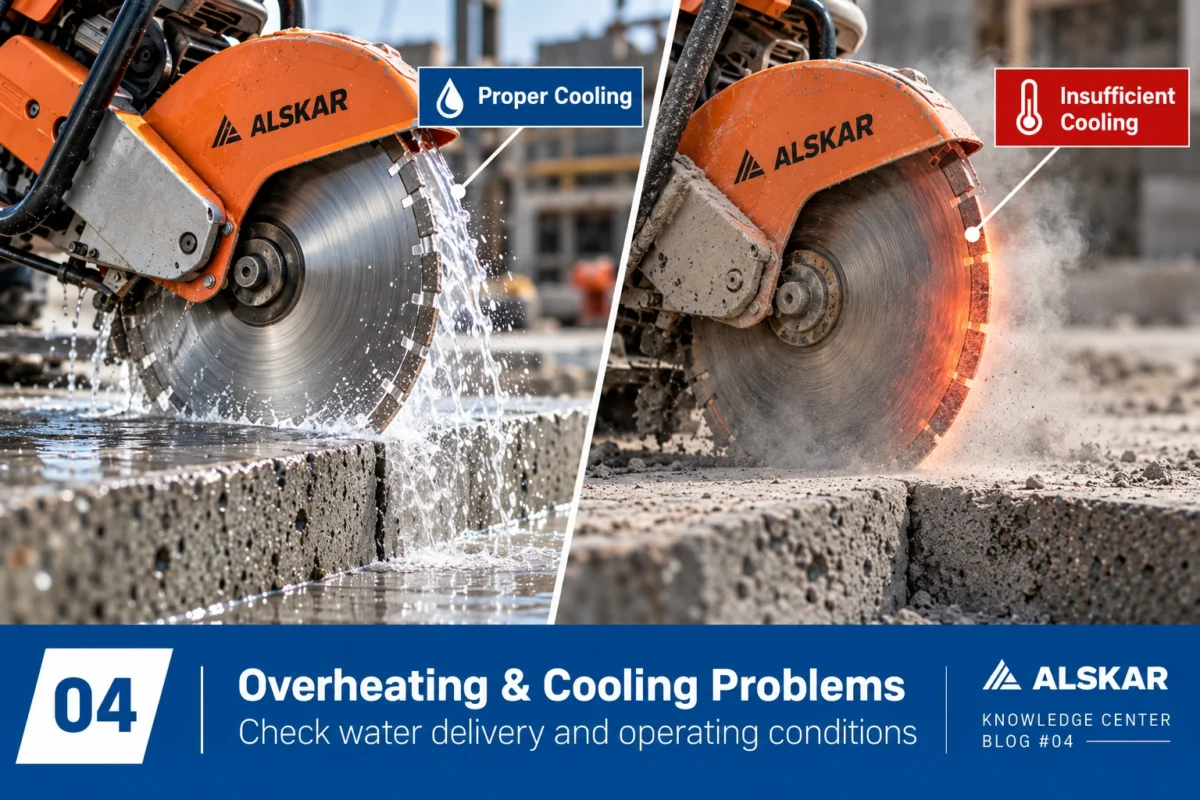
For wet-cutting diamond blades, proper water delivery is essential.
Water helps remove heat and cutting debris from the blade and cutting zone.
An insufficient or uneven water supply may contribute to:
- Excessive heat buildup
- Abnormal segment wear
- Blade distortion
- Poor debris removal
- Reduced cutting efficiency
- Increased risk of blade damage
What Should You Check?
With the saw safely shut down, inspect:
- Water supply availability
- Hoses and connections
- Water delivery nozzles
- Blockages or damaged components
- Water distribution to the blade
- Equipment operating instructions
Do not operate a wet-only blade without the required water supply.
For dry-rated blades, follow the manufacturer’s approved cutting-duty and cooling requirements.
A dry-rated blade does not exempt the operator or employer from applicable silica dust-control requirements.
For a detailed comparison of blade cooling and operating methods, read our Wet Cutting vs. Dry Cutting Guide.
7. Incorrect Saw Speed or Insufficient Power
Even a properly selected diamond blade may cut poorly if the saw is unsuitable for the application.
Incorrect Operating Speed
Diamond saw blades have specified maximum operating RPM ratings.
Saw compatibility depends on the blade diameter, arbor, rated speed, and manufacturer’s equipment requirements.
Never exceed the blade’s maximum rated RPM.
Do not modify a saw to operate outside its intended speed range.
Insufficient Available Power
Cutting performance may decline when the saw cannot supply adequate power under load.
Possible problems include:
- Worn or slipping drive belts
- Inadequate motor output
- Equipment maintenance issues
- An excessively demanding cut
- A blade specification unsuitable for the saw
For walk-behind saws, match the blade series to the intended horsepower range.
What Should You Do?
Stop and inspect the equipment according to the saw manufacturer’s maintenance instructions.
Check that the saw is functioning correctly before deciding that the blade needs replacement.
Do not increase cutting pressure to compensate for a machine that is operating improperly.
8. Incorrect Blade Installation or Rotation Direction
A diamond blade must be mounted correctly.
Problems with installation or mounting components can reduce cutting performance and create serious safety risks.
Check:
- Correct arbor fit
- Suitable mounting flanges
- Blade rotation direction, where marked
- Blade diameter and guard compatibility
- Proper mounting according to the saw manual
- Condition of the spindle and bearings
- Absence of visible blade damage
Some diamond blades are directional and include an arrow indicating the required rotation.
Follow that direction whenever specified.
Never use improvised arbor adapters or damaged mounting hardware.
What If the Blade Vibrates?
Stop cutting immediately.
Unusual vibration can indicate incorrect mounting, equipment problems, blade distortion, or structural damage.
Do not continue operating until the cause has been identified and corrected.
9. Why Does My Diamond Blade Still Have Height but Not Cut?
Visible segment height does not automatically mean that a diamond blade has usable cutting life remaining.
Several situations are possible.
Case A: The Blade Is Glazed
The diamond-bearing segment remains, but fresh cutting points are not being exposed effectively.
If the blade is otherwise serviceable, an approved dressing procedure may be appropriate.
Case B: The Remaining Segment Is Not Fully Usable
Some diamond blade constructions include a non-diamond-bearing support portion near the segment base.
If the usable cutting portion has been consumed, the blade may require replacement even though visible segment material remains.
Case C: The Blade Specification Is Incorrect
A blade intended for abrasive materials may not perform properly on hard cured concrete.
Changing to the correct application-specific blade can be more effective than repeatedly dressing the wrong blade.
Case D: The Saw Is Not Operating Correctly
Insufficient power, incorrect installation, or other equipment faults may also reduce cutting productivity.
Do not evaluate blade condition by segment height alone.
10. When Should a Diamond Saw Blade Be Replaced?
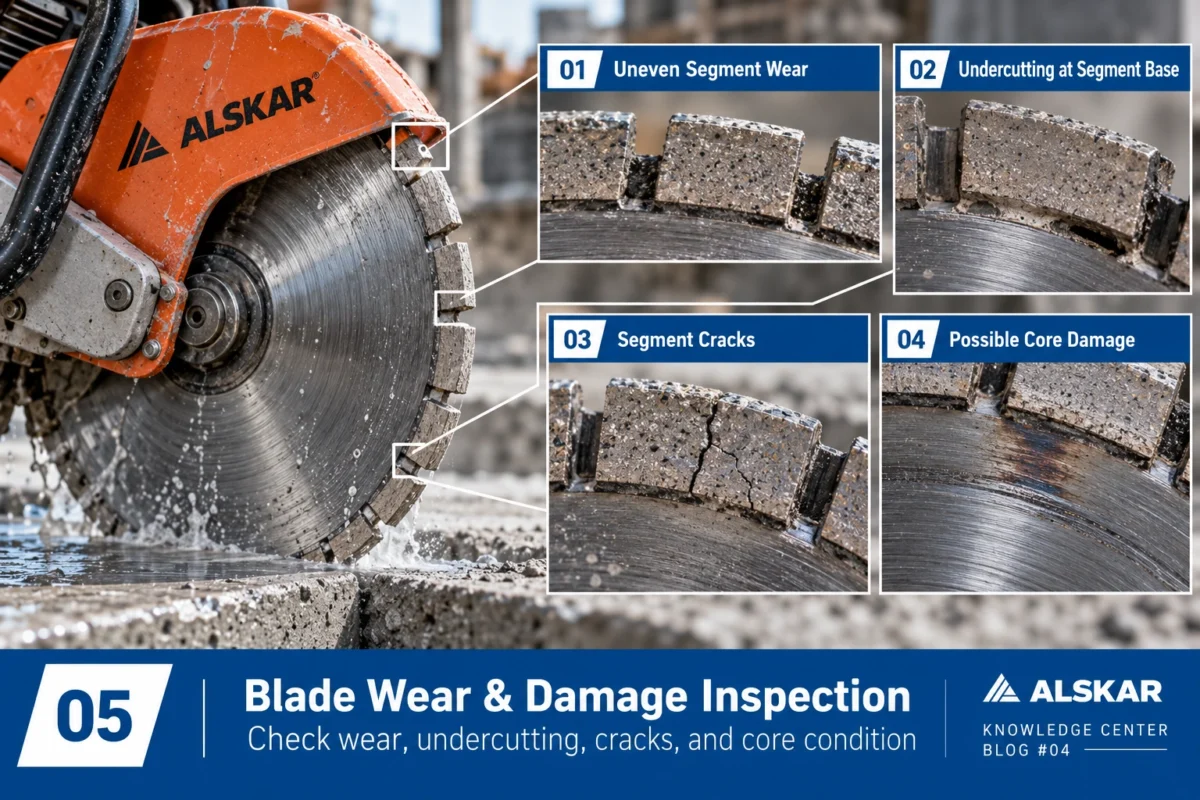
A diamond saw blade should be removed from service when it is damaged, worn beyond its specified usable limits, or otherwise unsafe for operation.
Examples include:
- Cracked steel core
- Missing or loose segments
- Cracked or broken cutting segments
- Significant distortion or loss of blade flatness
- Excessive undercutting
- Damage around the arbor
- Usable diamond cutting material exhausted
- Other defects identified by the manufacturer as requiring replacement
Never repair a damaged structural blade component by welding, bonding, or another unauthorized method.
A properly functioning blade that is merely glazed is not necessarily worn out, but its condition must be assessed before any approved corrective action.
11. Choosing the Right ALSKAR DIAMOND Blade to Prevent Cutting Problems
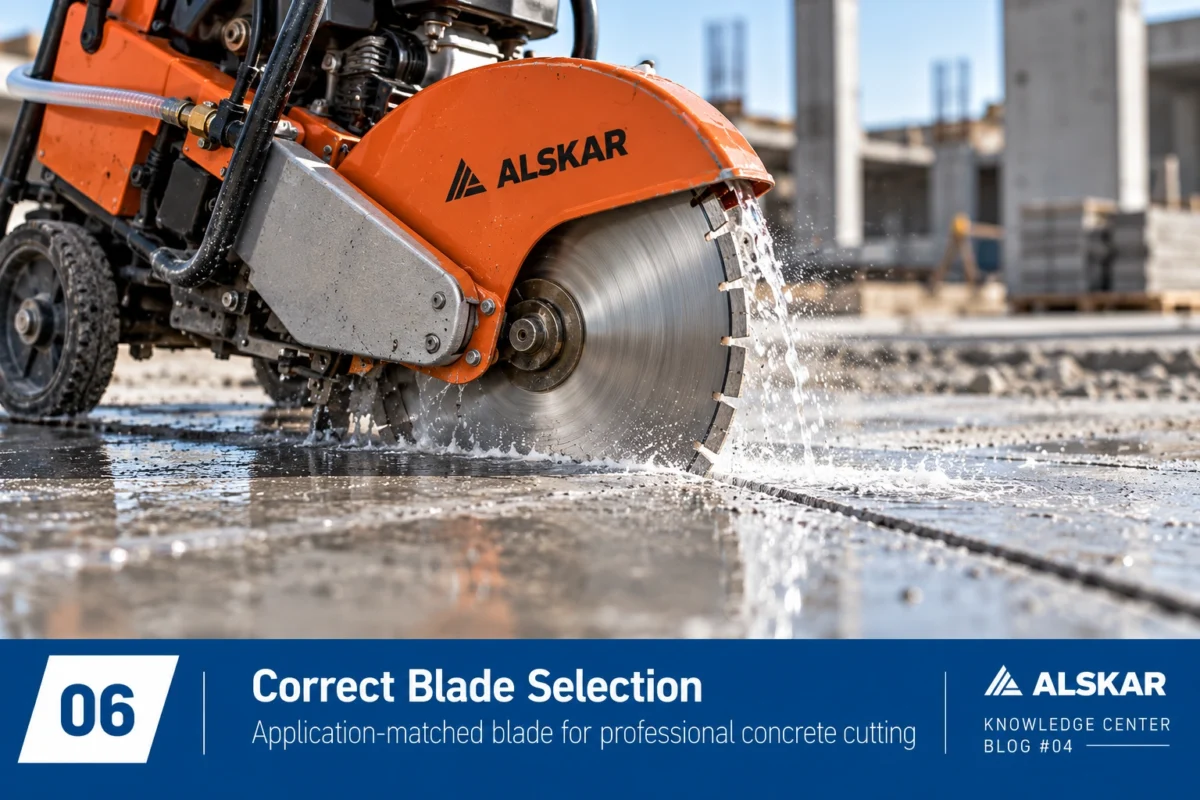
Many common blade problems can be prevented through correct application selection.
ALSKAR DIAMOND offers diamond saw blade options for concrete, asphalt, masonry, and professional walk-behind cutting.
General-Purpose Diamond Saw Blades
For general construction applications, select an ALSKAR general-purpose blade only when the intended material, saw type, and cutting method fall within the product’s published application range.
General-purpose blades offer versatility, but are not necessarily the best choice for every demanding production cut.
Professional Concrete Diamond Blades
For cured concrete applications, ALSKAR offers dedicated Pro Concrete blade series.
Premium Pro Concrete is intended for suitable wet-cutting walk-behind saws up to 35 HP, with P01, P02, and P03 bond options corresponding to different concrete conditions.
Supreme Pro Concrete is intended for suitable wet-cutting walk-behind saws in the 35–65 HP range, with five application-based bond options.
Choosing the correct series and bond can help reduce glazing and abnormal segment wear.
Asphalt Diamond Blades
For asphalt pavement, use a blade specifically rated for abrasive asphalt cutting.
ALSKAR asphalt blade designs include options with undercut protection for demanding pavement applications.
Combination Diamond Blades
When cutting a range of approved materials, a combination blade may offer practical versatility.
However, a dedicated concrete or asphalt blade may provide better results for sustained cutting in one material.
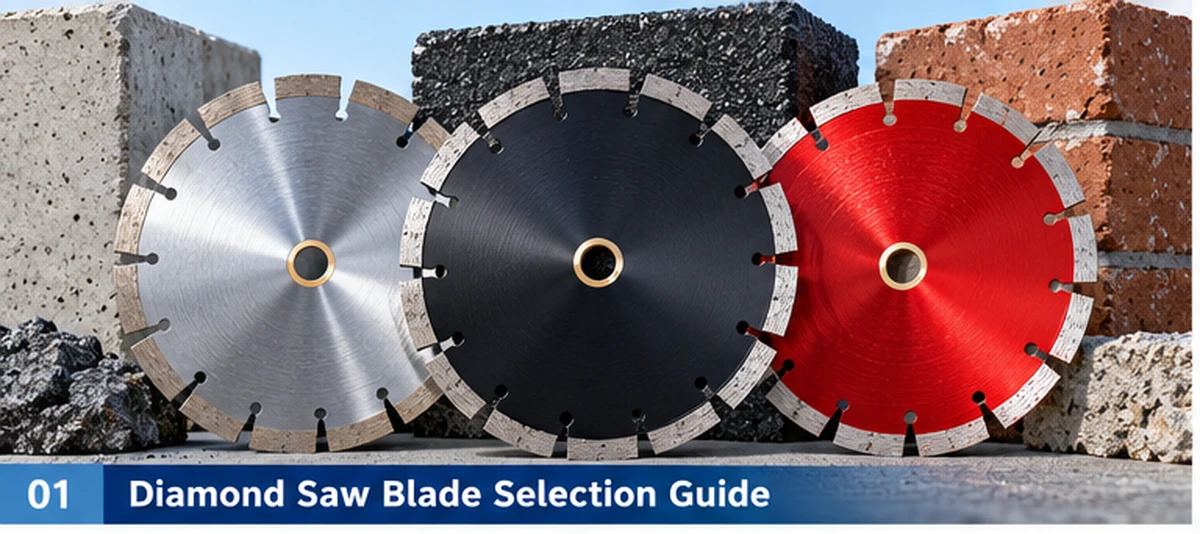
Not sure which blade suits your project? Start with our Diamond Saw Blade Selection Guide.
12. Diamond Blade Troubleshooting Checklist
Before restarting a cutting operation, confirm:
- The blade is structurally sound.
- The intended material matches the blade specification.
- The bond is suitable for the material and aggregate.
- The blade diameter and arbor match the saw.
- The saw’s operating speed is compatible with the blade rating.
- The blade is mounted correctly.
- The saw has adequate power and is properly maintained.
- The required cooling system is functioning.
- Appropriate silica dust controls are in place.
- Any corrective action follows the manufacturer’s instructions.
Final Takeaway
When a diamond blade stops cutting, replacing it immediately is not always the correct response.
Glazing, incorrect bond selection, inadequate cooling, insufficient saw power, and improper installation can all affect cutting performance.
The correct approach is to stop the operation, inspect the blade and equipment, identify the cause, and follow the manufacturer’s approved corrective procedures.
A properly matched diamond blade, correctly installed and operated within its specifications, is essential for safe, consistent, and productive cutting.
Frequently Asked Questions
Why is my diamond blade not cutting concrete?
Possible causes include glazing, an unsuitable bond, insufficient saw power, incorrect blade installation, or inadequate cooling. Stop and inspect the blade and saw before continuing.
Can a diamond blade become dull?
Yes. Diamond cutting points can become worn or insufficiently exposed, resulting in reduced cutting efficiency.
How do I know if my diamond blade is glazed?
Common symptoms include slow cutting despite remaining segment height and an unusually smooth or polished cutting surface. Other equipment problems can cause similar symptoms.
How do you sharpen a glazed diamond blade?
Some manufacturers permit dressing with an approved abrasive material or dressing block. Follow the specific blade manufacturer’s procedure. Never dress a structurally damaged blade.
Why does my diamond blade overheat?
Potential causes include insufficient cooling, an unsuitable blade, excessive cutting pressure, or incorrect operating conditions.
Why does my diamond blade wear out quickly?
A bond that is too soft for the material can cause rapid segment consumption. Abrasive materials, improper cooling, and machine problems may also contribute.
Can I use an asphalt blade for hard concrete?
Only when the blade is rated for the application. A highly wear-resistant asphalt blade may glaze on hard concrete.
Should I replace a diamond blade that stops cutting?
Not necessarily. Glazing or equipment problems may be correctable, but any blade with structural damage or exhausted usable diamond material must be replaced.
What causes uneven diamond blade segment wear?
Possible causes include uneven water delivery, machine alignment problems, incorrect mounting, or unsuitable cutting conditions.
Explore ALSKAR DIAMOND Saw Blades
Whether you are cutting cured concrete, reinforced concrete, asphalt, or masonry, the correct blade specification makes a difference.
Explore ALSKAR DIAMOND’s professional saw blade ranges or contact our team with your saw model, horsepower, blade diameter, material, and cutting conditions.
Technical note: This article provides general troubleshooting guidance. Inspection, dressing, maintenance, and replacement must follow the relevant blade and equipment manufacturers’ instructions. Applicable OSHA silica exposure controls remain necessary during cutting and blade dressing operations.